
Does this scene sound familiar? You set out a fresh box of crayons and a stack of beautiful printable coloring sheets, hoping for a quiet afternoon of creativity. Instead, your child takes one look, scribbles for five seconds, and runs off to play with trucks. Or worse, they meltdown and declare, “I hate coloring!”
As parents, it is easy to worry. We know that drawing is a proven way to teach patience and focus, develop fine motor skills, and build school readiness. But when a child resists the crayon, it is rarely because they lack creativity. Often, it is because the physical act of coloring is uncomfortable, exhausting, or simply boring for their active bodies.
The good news? You can turn this around. By swapping standard tools for novel ones, changing the environment, and tapping into their obsessions, whether that’s roaring dinosaurs or speeding cars, you can build their confidence. At YoloColoring.com, we believe every child is an artist. This guide will show you how to support your reluctant artist using occupational therapy-backed tips and our free resources.
Part 1: Why Do Some Kids Hate Coloring?
Before we fix the problem, we need to understand it. For many children, coloring is physically demanding work.
1. It’s a Workout, Not Just Play
Coloring requires a complex chain of muscles. A child needs core stability to sit up, shoulder stability to control their arm, and intricate finger muscles to manipulate the tool. If any of these are weak, coloring can actually cause pain or fatigue. A child saying “this is boring” often means “my hand hurts.”
2. The Grip Struggle
To control a standard thin crayon, a child needs a developed “tripod grasp” (using the thumb and index finger). Children with developing hands often revert to a fist grasp, which makes precision impossible and leads to frustration.
3. Sensory Overload (or Underload)
Some children dislike the friction of crayon on paper (tactile defensiveness). Others are “sensory seekers” who find sitting still under-stimulating; they need heavy work and movement to feel engaged.
Part 2: Swap the Toolkit – Novelty is Key
If your child hates holding a regular pencil, stop forcing it. Novel tools can bypass the physical struggle and make art exciting again.
Rock Crayons and Broken Crayons
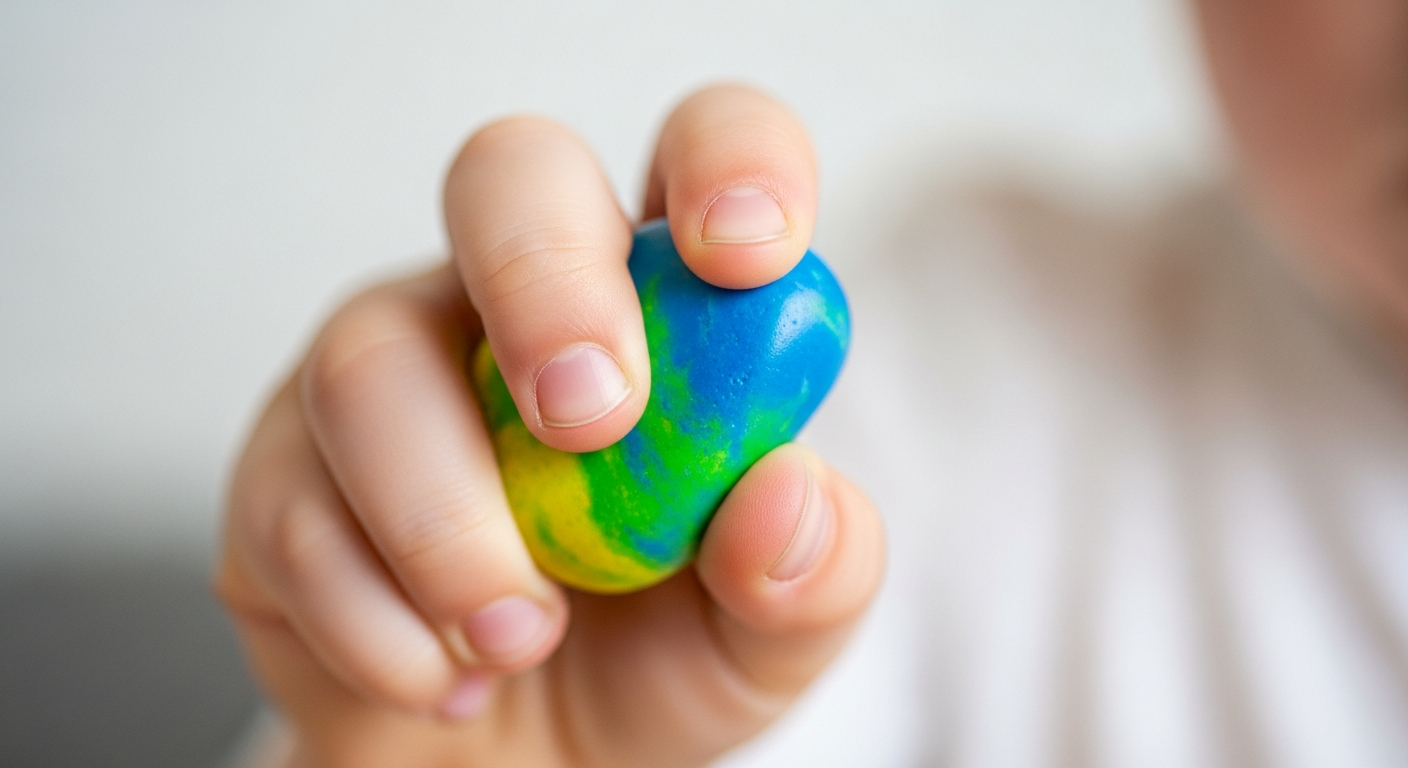
Standard crayons encourage a fist grasp in toddlers. Rock crayons (crayons shaped like pebbles) are game-changers because they are too small to hold in a fist. To pick one up, a child must use their fingertips (a pincer grasp). This automatically corrects their grip without you having to nag them.
- DIY Tip: You don’t need to buy expensive supplies. simply break your regular crayons in half! Short crayons force the same mature grasp as rock crayons.
Dot Markers (Bingo Daubers)
For kids who find the “drag” of coloring tiring, dot markers are a miracle. They require zero pressure, just a simple stamping motion. They are chunky, easy to hold, and cover the paper quickly, giving instant gratification.
- Activity Idea: Download dot marker specific coloring pages and let your child “stamp” the color in!
Vibrating Pens and Window Markers
- Vibrating Pens: These provide intense sensory feedback that “wakes up” the hand muscles.
- Window Markers: Drawing on a glass door or window is frictionless and exciting. It feels “naughty” but is actually a great way to build strength.
Part 3: The “Dinosaur” Strategy – Interest-Led Art
If your child loves dinosaurs, stop asking them to draw flowers. Use their passion as the gateway.
Dinosaur Shadow Tracing
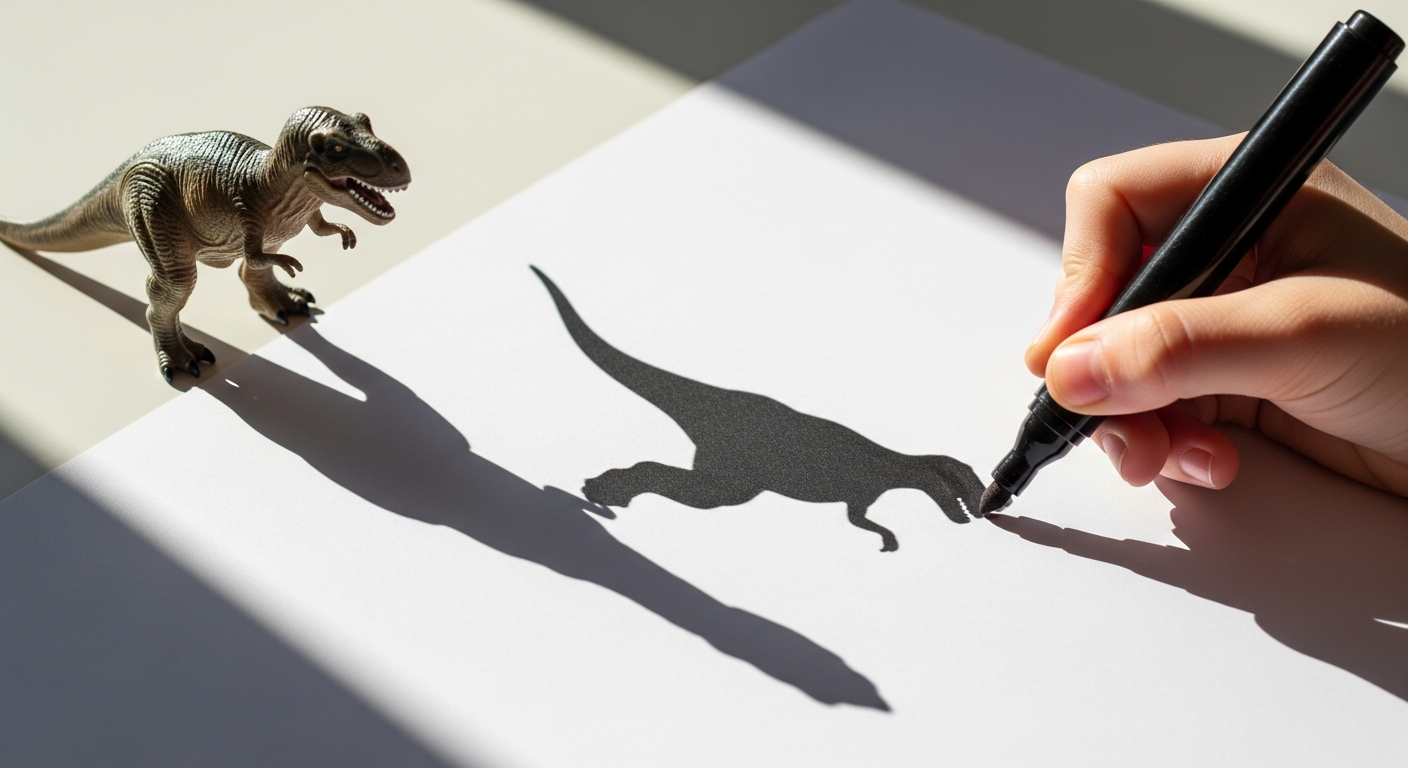
This is perfect for perfectionists who are scared they can’t draw “right.”
- Grab a plastic dinosaur toy and a piece of paper.
- Place them in the sun (or under a lamp) so the dinosaur casts a shadow on the paper.
- Have your child trace the shadow.
- Why it works: The shadow does the hard work of creating the shape. The child gets to practice line control without the cognitive load of planning the drawing.
Fossil Rubbings
Place a textured item (like a leaf or sandpaper) under a sheet of paper. Have your child rub a crayon over it to reveal the texture. It’s like magic! This teaches children how to regulate pressure, too soft and nothing appears; too hard and the paper rips.
Check out our printable dinosaur coloring pages here to use as templates!
Part 4: The “Car” Strategy – Art in Motion
For the high-energy child who won’t sit down, bring the art to their level.
Marker Cars
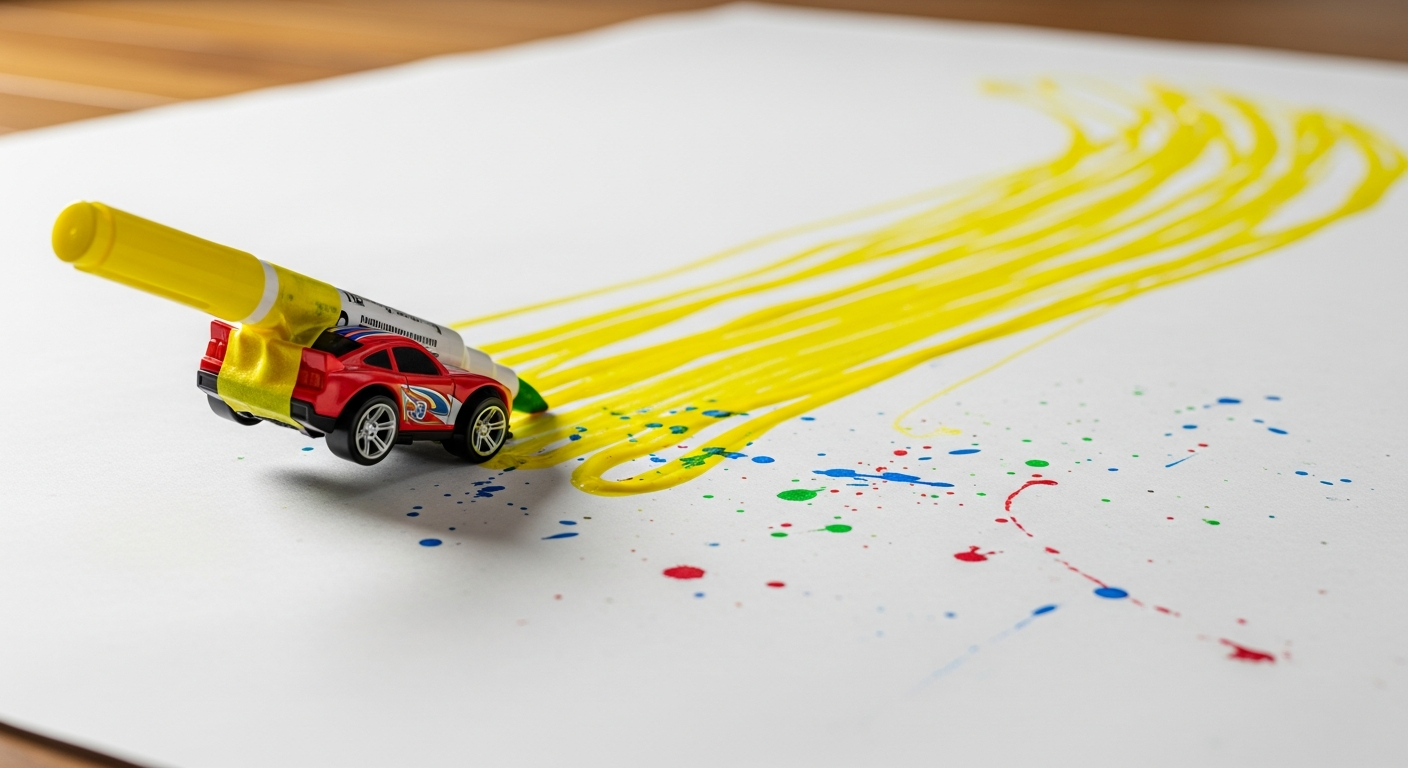
Tape a washable marker to the back bumper of a toy car. Roll out a big sheet of paper on the floor and let them “drive.” As they zoom the car around, they are creating lines and loops. This builds shoulder stability and visual tracking skills while feeling like pure play.
Tire Track Painting
Dip the wheels of a monster truck into paint and drive it across paper. Compare the tracks of different vehicles. This is “process art”, focusing on the action rather than the result.
Part 5: Change the Environment
The kitchen table might be the problem.
Go Vertical
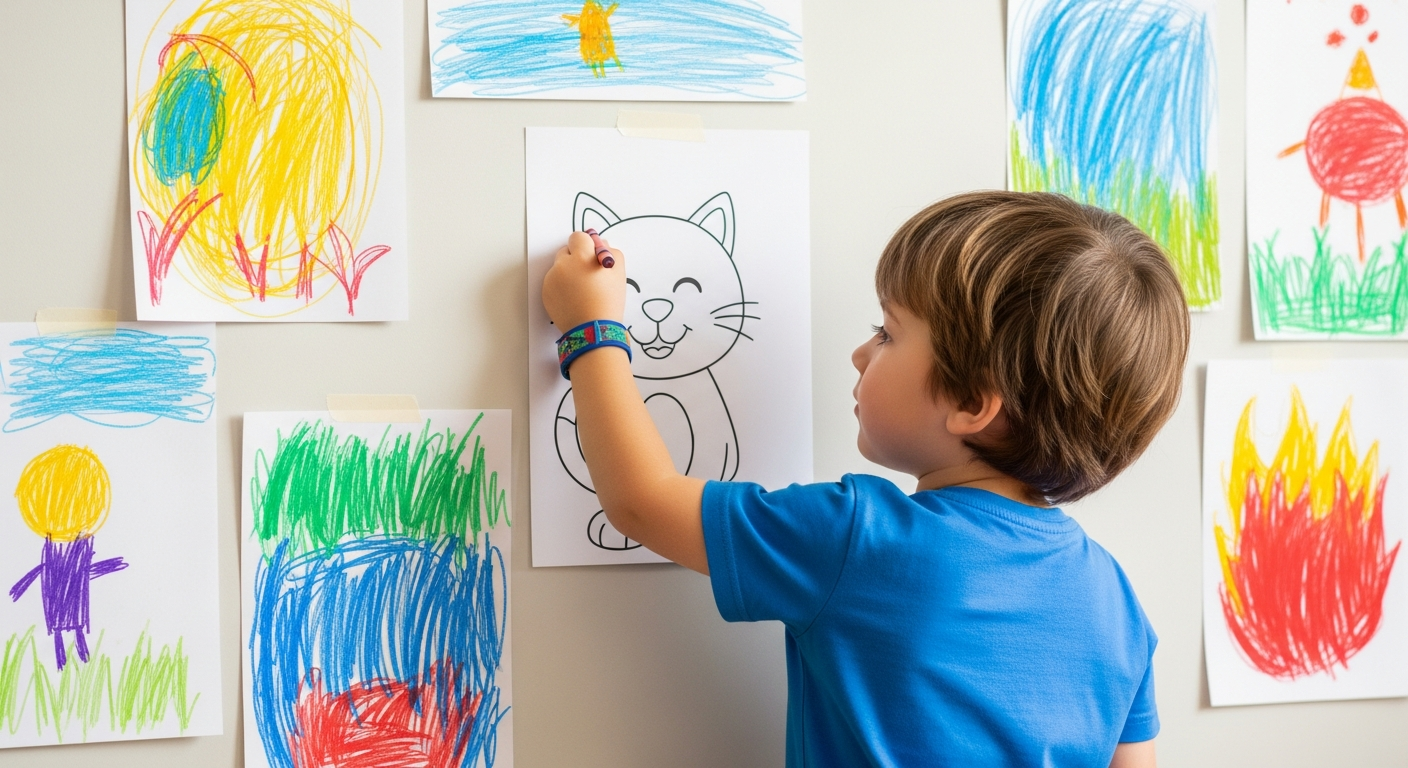
Tape your printable coloring sheets to the wall or use an easel. Working on a vertical surface forces the wrist to bend back (extension), which stabilizes the hand and allows for better finger control. It also strengthens the shoulder and core.
Tummy Time for Big Kids
Have your child lie on their stomach on the floor to draw. This position stabilizes the shoulder blade and provides calming deep pressure, helping wiggly kids focus.
Part 6: Stealth Fine Motor Training
Sometimes the best way to improve drawing is to put the pencil down and strengthen the hands with other tools.
- Spray Bottles: Squeezing a spray bottle filled with water (or colored water for snow!) strengthens the arches of the hand.
- Tongs and Tweezers: Have your child feed “dinosaur food” (pom poms) to a T-Rex using kitchen tongs. This builds the muscles needed for a pencil grasp.
- Playdough: Hiding beads in putty and digging them out is essentially weightlifting for fingers.
Conclusion
Encouraging a reluctant artist isn’t about forcing them to stay inside the lines. It’s about meeting them where they are, whether that’s on the floor driving marker cars or at the window tracing shadows.
Focus on the process, not the product. Celebrate the scribbles, use printable coloring sheets as cutting or gluing templates if they prefer, and keep it fun. Visit YoloColoring.com to explore our vast library of themes that can spark that initial interest. Your child has a world of color inside them; they just need the right tool to let it out.
Frequently Asked Questions (FAQ)
1. My child holds the crayon in a fist. Should I correct them?
If they are a toddler (under 3), a fist grasp is normal. If they are older, don’t nag them. Instead, give them broken crayons or rock crayons. These small tools physically force a fingertip grasp, correcting the grip naturally without frustration.
2. My child complains that their hand hurts when coloring. What should I do?
This usually means their hand muscles are tired. Switch to low-resistance tools like dot markers or paint sticks that glide easily. Incorporate hand-strengthening play (like playdough or spray bottles) to build endurance over time.
3. Is it okay if my child never likes coloring books?
Absolutely! Some children find pre-drawn lines restrictive. Offer blank paper, cardboard boxes, or windows to draw on. You can also use YoloColoring’s printable coloring sheets for other activities, like cutting practice or collage bases, rather than just coloring.
4. How can I help a perfectionist child who is afraid to make mistakes?
Try using materials that can’t be erased, like markers, to teach them that “oops” moments are okay. Shadow tracing is also excellent because the outline provides a safety net, reducing the anxiety of drawing from scratch.
5. Why do you suggest drawing on walls (vertical surfaces)?
Vertical surfaces help stabilize the wrist in the correct position for writing. It also strengthens the shoulder and arm muscles, which are the foundation for fine motor control.

Sophia Williams is the voice of the YoloColoring community. As our Content Editor, she crafts all the helpful articles, guides, and descriptions you read on the site. She is also our Community Manager, dedicated to connecting with users, celebrating their creations, and fostering a warm, supportive environment for all colorists.