Toddlers often grab crayons with a full fist, which can make it harder for them to learn precise coloring and writing later on. The good news is there’s a fun, simple way to help them hold crayons correctly – by using the broken crayon trick. This clever technique involves giving your child short crayon pieces so they naturally use their thumb and fingers to hold them. In fact, many experts recommend using small pencils or broken crayons when little ones are learning to color. It’s an easy hack that turns coloring time into a lesson in fine motor skills. You can even turn practice into play by using free printable coloring sheets from YoloColoring for your toddler to scribble on as they learn.
Materials Needed
Before you start, gather a few simple materials:
- Crayons – Don’t be afraid to use old crayons and break them into smaller pieces (about 1 inch long). These will be perfect for the tripod grip exercise.
- Paper or Printable Coloring Pages – Have some blank paper or coloring pages (you can find free printable coloring sheets on YoloColoring) ready for your toddler to draw on.
- Flat Work Surface – A child-sized table, high chair tray, or even floor space with a firm surface for coloring. (Optionally, tape the paper down at the corners to keep it from slipping or curling up.)
- Patience and Enthusiasm – Bring a positive attitude! Teaching a new skill takes gentle encouragement and practice.
Step 1: Break the Crayons into Short Pieces
Short crayon pieces are just the right size for tiny hands. Because your toddler can’t wrap their whole fist around a small piece, they’ll instinctively use their fingers and thumb to hold it. This naturally encourages a proper three-finger hold (the tripod grip) and makes it much easier for them to develop a correct pencil grasp over time. Start by taking a few crayons and snapping them into halves or thirds (around 1-2 inches long). It might feel odd to break crayons on purpose, but it’s for a great cause! Broken pieces of crayon are too small to grip with a closed fist, so your toddler will figure out how to use their fingers and thumb to scribble. Choose several colors so they have a variety of fun crayon bits to try.
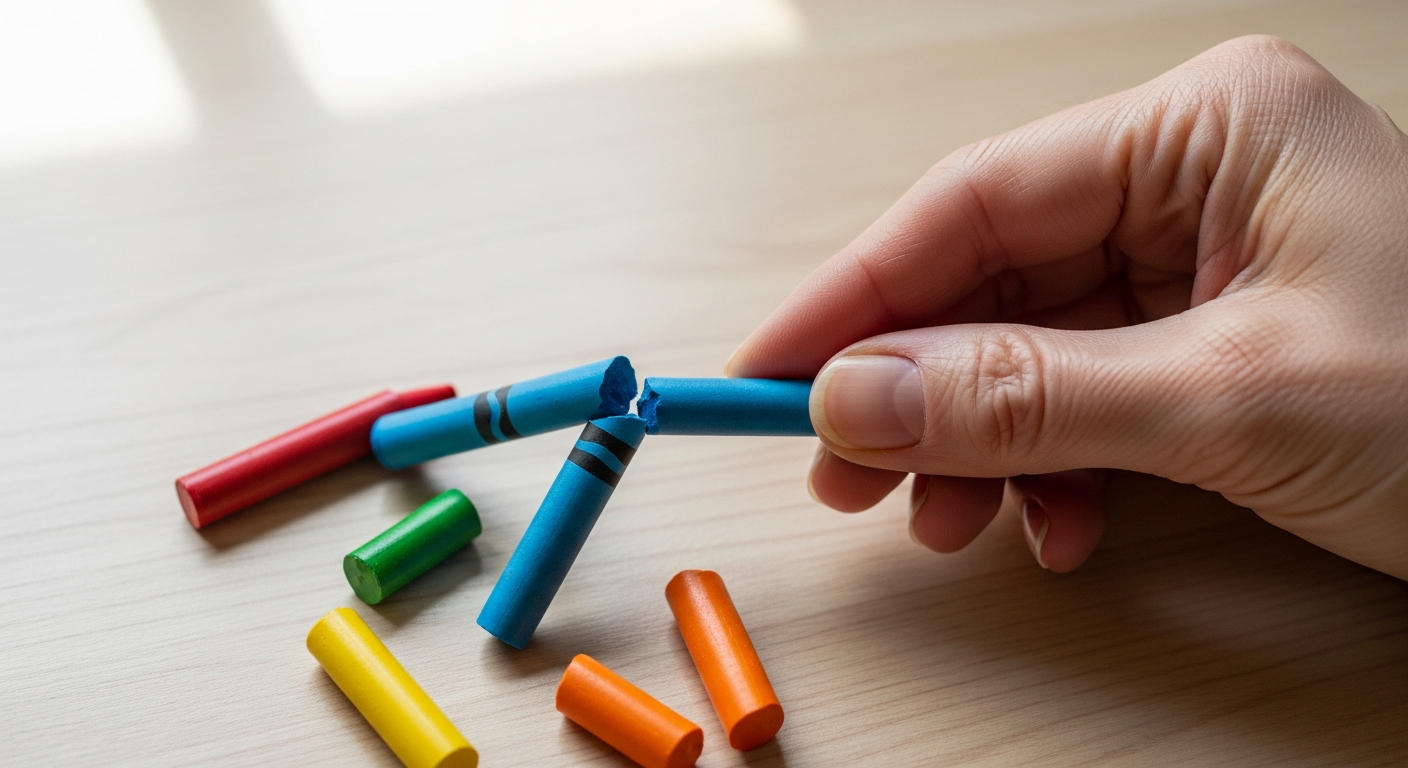
Adult hand breaking crayons into short pieces for tripod grip practice
Tip: If the crayon has paper wrapping, peel some of it off before breaking so that the smaller pieces are ready to use. Always make sure the pieces are large enough not to be swallowed, and supervise your child during this activity (more on safety in the Pro Tips below).
Step 2: Demonstrate the Tripod Grip
Now that you have some crayon bits, show your toddler how to hold one. The goal is to have them pinch the crayon with their thumb and index finger, while resting it on the side of their middle finger. This three-finger hold is called the tripod grip. An easy way to demonstrate: pick up a crayon piece yourself and hold it with just your thumb and index finger, then say, “Look how Mommy/Daddy holds it with two fingers! Can you do it?” You might guide their fingers at first – place their thumb on one side and index finger on the other, with the crayon supported by the middle finger. Keep it light and fun, like a game. For example, you can say the crayon is a little “baby crayon” that needs a gentle pinch so it can draw.

Toddler holding a small crayon with proper tripod grip
Remember that toddlers learn by imitation, so consider coloring alongside them. Show them slowly how you color with the tripod grip. If your child tries to grab the crayon in a fist again, gently remind them: “Use your fingers to hold it, like this.” Give frequent, gentle reminders rather than constant corrections. With time and practice, they will start to adjust their hand position on their own.
Step 3: Make Coloring Time Fun and Easy
Set your toddler up for success by giving them an inviting space to color. Place a big sheet of paper or a printable coloring page on the table (tape it down so it stays put). Now encourage your child to draw and scribble using the broken crayon pieces. At first, the marks might just be random scribbles – that’s perfectly okay! The focus here is on the process of holding the crayon, not creating a perfect picture.

Toddler coloring printable sheet using broken crayons
Join in to make it fun: draw a simple shape or outline and let your toddler color it in, or have a “draw on the floor/wall” day by taping paper to the floor or a vertical surface. Coloring on a vertical surface like an easel or wall can actually further develop their hand and wrist muscles. As they color, praise them for using their “finger hold” or “big kid grip.” Keep the mood upbeat. You could say things like, “Wow, you’re coloring so well with your fingers!” or “Look at the cool lines you’re making.” This positive reinforcement will make them enjoy the activity and want to continue.
Keep initial coloring sessions short and sweet – a few minutes at a time is fine. Toddlers have short attention spans, so ending on a happy note will leave them excited for next time. If they get tired or frustrated, let them take a break and try again later. The key is consistent, low-pressure practice.
Step 4: Encourage and Guide Gently
While your toddler is experimenting with their new tripod grip, be their biggest cheerleader. Encouragement is crucial. Smile and acknowledge their efforts: “I see you’re using your fingers to hold the crayon, great job!” If their grip isn’t perfect, that’s okay – avoid criticizing or over-correcting them constantly. Instead, offer gentle guidance. For example, if you notice they’ve reverted to a full fist grip, you might casually say, “Oops, your other fingers want to help too! Let’s try holding it this way,” and help adjust their hold.
Make it a shared activity. You can draw alongside them and occasionally point out how you’re holding your crayon. Kids love to mimic, so seeing you do it reinforces the lesson. Additionally, keep the experience positive by focusing on the fun (“I love the blue circle you drew!”) rather than saying “No, don’t hold it like that.” By creating a supportive atmosphere, your child will feel confident and will gradually improve their technique. Remember, the goal is to build their fine motor skills and confidence. Every scribble with the correct grip is a step forward in strength and coordination for those little fingers.
Step 5: Practice Regularly and Keep it Playful
Like any new skill, the tripod grip gets stronger with regular practice. Try to incorporate a little coloring or drawing time into your toddler’s daily or weekly routine. Consistency will help reinforce the proper grip and build muscle memory. You might designate a “coloring corner” stocked with broken crayon pieces and printable coloring sheets within easy reach. Encourage your child to color a little bit each day, whether it’s in the morning or a calm activity before bedtime.
Keep it playful. For instance, you can make up small challenges or games: “Can you draw a happy face using your blue crayon? Let’s do it together!” or “How about we trace your hand on the paper and color it in?” These activities make practicing the grip feel like play, not work. Also, feel free to explore other short coloring tools as they improve – chalk pieces, mini markers, or golf-sized pencils can provide variety while still promoting a finger grasp. The broken crayon trick isn’t the only way to develop fine motor skills, but it’s one of the simplest and most effective. Over time, you’ll likely notice your toddler’s hand strength and control improving. In fact, by around 3 to 4 years old, many children naturally begin shifting from a toddler fist grip to a more mature three-finger hold, and your practice will help them get there. Stay patient and keep the creative fun going – you’re laying the groundwork for writing skills they’ll use in preschool and beyond!
Pro Tips (Expert Advice)
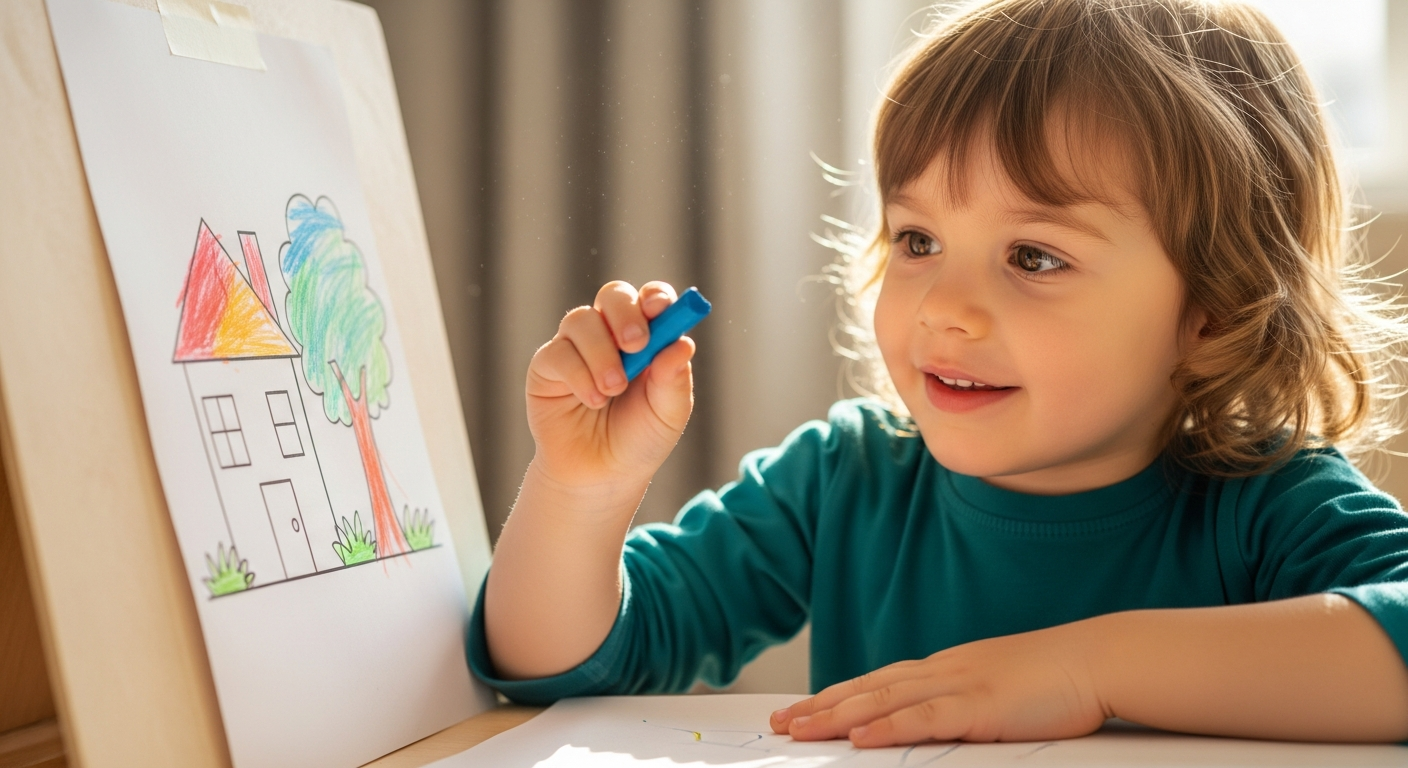
Toddler coloring on vertical surface to strengthen fine motor skills
Even with a straightforward activity like this, a few insider tips can make things smoother:
- Safety First: Always supervise your toddler when they’re using small crayon pieces. Broken crayons can be a choking hazard, especially for children who still like to put objects in their mouth, so keep a close eye. When art time is over, gather up the crayon bits and store them safely out of reach.
- If the Paper Slips or Curls: Toddlers can be enthusiastic scribblers! To prevent the paper from moving (or the edges curling up if they press very hard), tape the paper down to the table on all four corners. You can also use a clipboard or draw on a sturdier surface like cardstock. This way, your child can focus on coloring without the paper sliding around.
- Dealing with Resistance: Some children might initially resist using a broken crayon – perhaps they find it strange or say “It’s broken!” with concern. To handle this, involve them in the “breaking” as a fun experiment (“Let’s make baby crayons!”) or present the short crayons as special new art tools. Once they try it and see they can make cool marks, they usually forget about the fact that it’s broken. Keep the tone light and celebratory.
- Make Use of Vertical Surfaces: As mentioned earlier, try taping a coloring page to the wall or fridge at your toddler’s height. Coloring on a vertical surface not only mixes up the fun but also strengthens shoulder and wrist muscles. It naturally encourages a good wrist position and can further promote proper grip because it’s harder to use a fist when drawing upright.
- Fine Motor Boosters: In addition to coloring, let your child play with other fine motor skill activities. Playing with playdough, stringing large beads, or picking up small objects (under supervision) can all improve the hand strength and coordination needed for a tripod grip. The more opportunities they have to use their fingers in daily play, the faster they’ll develop a comfortable and efficient grasp.
Conclusion

Broken crayons and printable sheets ready for toddler tripod grip practice
Teaching your toddler the tripod grip doesn’t have to be stressful – it can actually be a fun and rewarding experience for both of you. The broken crayon trick is a simple yet powerful technique to nudge your little one toward the proper pencil hold. By using short crayon pieces, you’re setting them up to grip naturally with their fingers, which builds the fine motor strength they’ll use for writing, drawing, and everyday skills like buttoning or using utensils.
Now that you know the secret, it’s time to put it into practice! Grab some crayons, snap them in half, and print out a few cute coloring pages from YoloColoring. Sit down together and let your child explore this new way of coloring. Remember to keep the atmosphere positive and pressure-free – every line they draw with the tripod grip is progress. With consistency and encouragement, you’ll be amazed at how quickly their skills grow. So go ahead and try the broken crayon trick today. Happy coloring, and enjoy watching those little hands master big skills!
FAQs
Q: What is the tripod grip and why is it important?
A: The tripod grip is the way of holding a writing tool using three fingers – the thumb, index, and middle finger. It’s important because it gives children better control and stability when drawing or writing. This grip helps develop the hand muscles needed for neat coloring now and smooth handwriting as they get older. In short, a proper tripod grip makes writing easier and less tiring for your child, and it sets them up for success when they start learning to write letters and numbers.
Q: Why does breaking crayons help my child’s pencil grasp?
A: Using broken crayons is a clever trick to encourage the correct hold. A short crayon piece is too small for your toddler to grab with their entire fist, so they will instinctively use their fingers and thumb to hold it. This encourages the desired tripod grip without any nagging or complex instructions – it happens naturally! Additionally, coloring with small pieces can strengthen their finger muscles (since they have to press a bit harder to make marks) and improve fine motor control. Many occupational therapists love this technique because it’s simple and it works.
Q: At what age should my child use the tripod grip?
A: It’s normal for toddlers to start with a whole-hand grasp (fist grip) when they first scribble. Most children begin transitioning to a tripod-style grip around 3 to 4 years old. Early on (around age 2), you might see a “digital pronate” grasp – where they use all their fingers but pointed downward – and that’s a stepping stone toward the tripod hold. By preschool or kindergarten (around 5 years old), many kids can hold a pencil or crayon with a refined tripod grip on their own. Every child is different, so don’t worry if yours is taking a little longer. With gentle practice like the broken crayon trick and other fine motor activities, they’ll get there. If you have concerns about your child’s grasp by the time they’re school-aged, consider consulting an occupational therapist for personalized guidance.

Sophia Williams is the voice of the YoloColoring community. As our Content Editor, she crafts all the helpful articles, guides, and descriptions you read on the site. She is also our Community Manager, dedicated to connecting with users, celebrating their creations, and fostering a warm, supportive environment for all colorists.