
We all know the struggle. Your child finishes a beautiful coloring page, their eyes shining with pride. You hang it on the fridge, but eventually, the fridge runs out of space. What happens next? Instead of tucking those masterpieces away in a drawer to be forgotten, why not transform them into a toy that keeps the fun going?
By learning how to turn coloring pages into custom jigsaw puzzles, you can give your child’s artwork a second life. This isn’t just a craft; it’s a “whole-brain” workout. It combines the creativity of art with the logic of engineering, creating a personalized game that builds fine motor skills and spatial awareness. Plus, it’s a fantastic way to upcycle materials you already have at home!
Ready to get started? Grab your crayons and some printable coloring sheets from our collection at YoloColoring, and let’s get crafty.
Why Combine Coloring and Puzzles?
Before we dive into the glue and scissors, let’s talk about why this activity is a developmental powerhouse for kids.
- Boosts Visual Memory: When a child colors an image, they memorize the details – the blue clouds, the red cape, the green grass. When they solve the puzzle later, they use those memories to orient the pieces. It connects creativity with analytical thinking.
- Fine Motor Skills Workout: Coloring helps refine the “pincer grip” needed for writing. Cutting out puzzle pieces and fitting them together strengthens hand-eye coordination and dexterity.
- Emotional Reward: There is a unique sense of accomplishment in solving a puzzle you created yourself. It turns a static image into an interactive achievement.
Step 1: Select the Perfect Coloring Page
Not every image makes a good puzzle. To ensure your child isn’t frustrated later, choose the right design based on their age.
- For Toddlers (Ages 2-4): Look for single, large subjects with bold outlines. A big apple, a car, or a simple animal face is best. Avoid busy backgrounds. Check out our Animals section for great options.
- For Preschoolers (Ages 4-6): Scenes with distinct color zones work well. Think of a superhero with a red cape against a blue sky. The high contrast helps them figure out which piece goes where.
- For Older Kids (Ages 7+): Detailed mandalas or complex landscapes are perfect. The intricate lines provide “clues” on every single puzzle piece.
Pro Tip: Print your chosen page on cardstock if possible. It holds up better to glue and play than standard printer paper.
Step 2: The Art Phase (Coloring with Purpose)
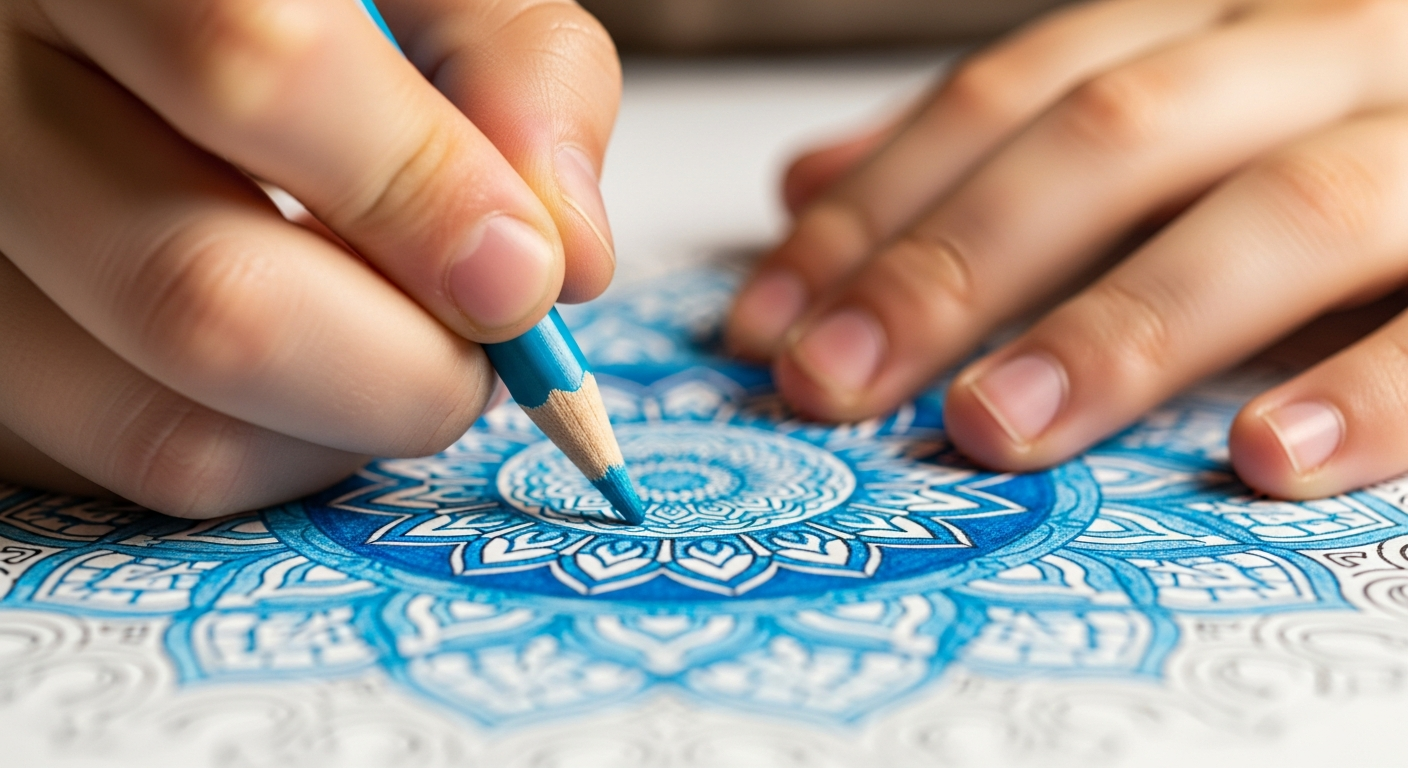
Encourage your child to color with the puzzle in mind. This is a great opportunity to teach blending techniques.
- Avoid “The Blue Sky Problem”: If a puzzle has a huge area of solid blue sky, it’s really hard to solve! Encourage your child to draw clouds, birds, or a sun in empty spaces. These act as “landmarks” for the puzzle solver.
- Saturation Matters: Make sure they press down and fill the white space completely. Rich, vibrant colors make the final puzzle look professional and exciting to play with.
Step 3: Mounting (The Secret to Durability)
This is the most critical step. To make a puzzle that snaps together satisfyingly, you need a sturdy backing.
The Best Material: An empty cereal box! This material, known as chipboard, is the perfect thickness. It is rigid enough to hold a shape but thin enough for scissors to cut easily.
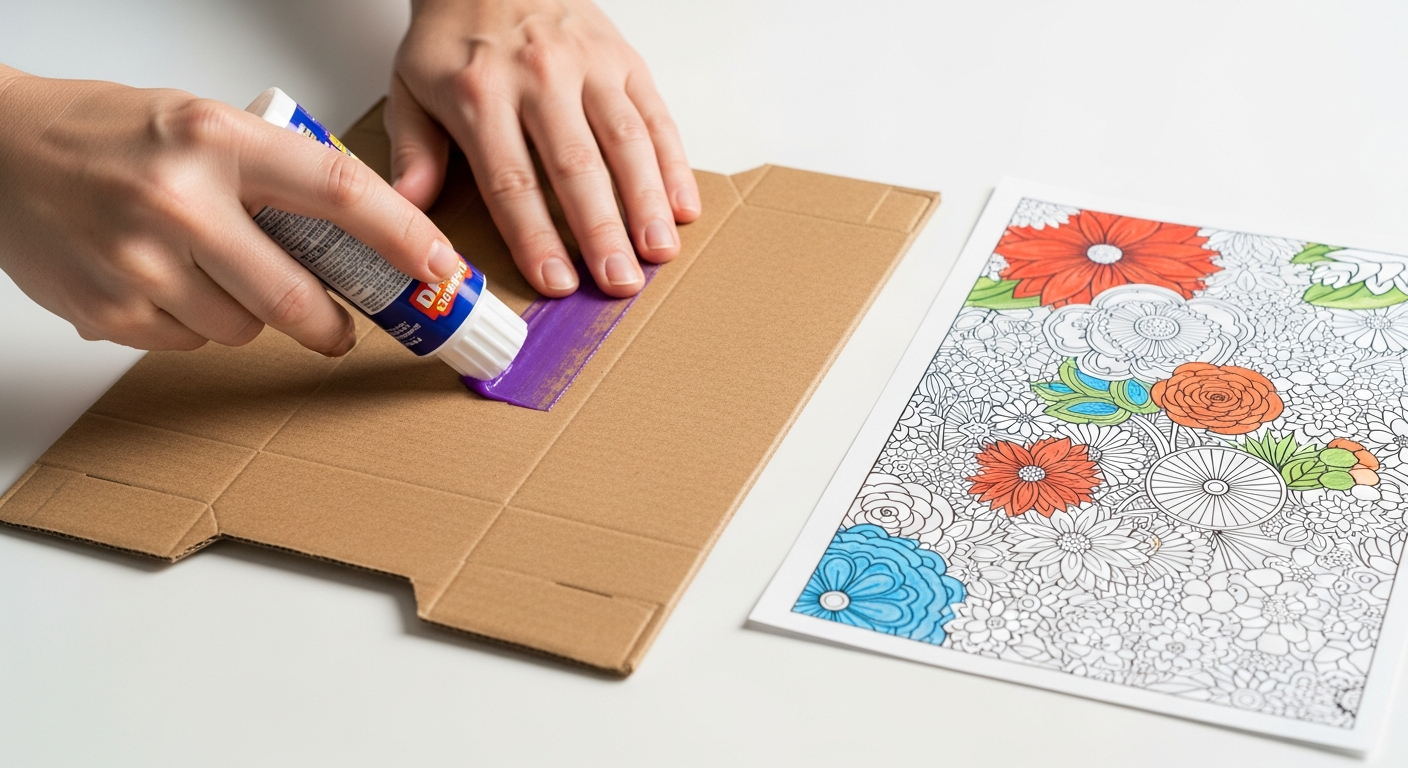
The “No-Wrinkle” Gluing Method: If you use too much liquid glue, your coloring page will wrinkle (cockle) as it dries. Here is how to get a smooth finish:
- Cut the panel off your cereal box.
- Use a Spray Adhesive (best option) or a high-quality glue stick. If using liquid glue, spread it into a super-thin layer with an old credit card.
- Glue onto the cardboard (not the paper) to minimize moisture absorption.
- Press firmly from the center outward to push out air bubbles.
- Let it dry completely under a heavy book. If the paper is damp, it will tear when you try to cut it.
Step 4: Sealing the Artwork
Puzzles get handled a lot. Sticky fingers and friction can ruin the artwork if it isn’t protected.
- For Crayon/Colored Pencil: You can usually skip this, or use a clear acrylic spray.
- For Markers: Be careful! Liquid sealers like Mod Podge can smear washable markers. If you used markers, spray the page with a light coat of hairspray (aartist’s fixative) first to “set” the ink before applying any liquid sealer.
- The Mod Podge Method: Apply a thin layer of Mod Podge (Matte finish is best to reduce glare) over the artwork. This creates a plastic-like skin that makes the pieces wipeable and durable.
Step 5: The Cut (Engineering the Pieces)
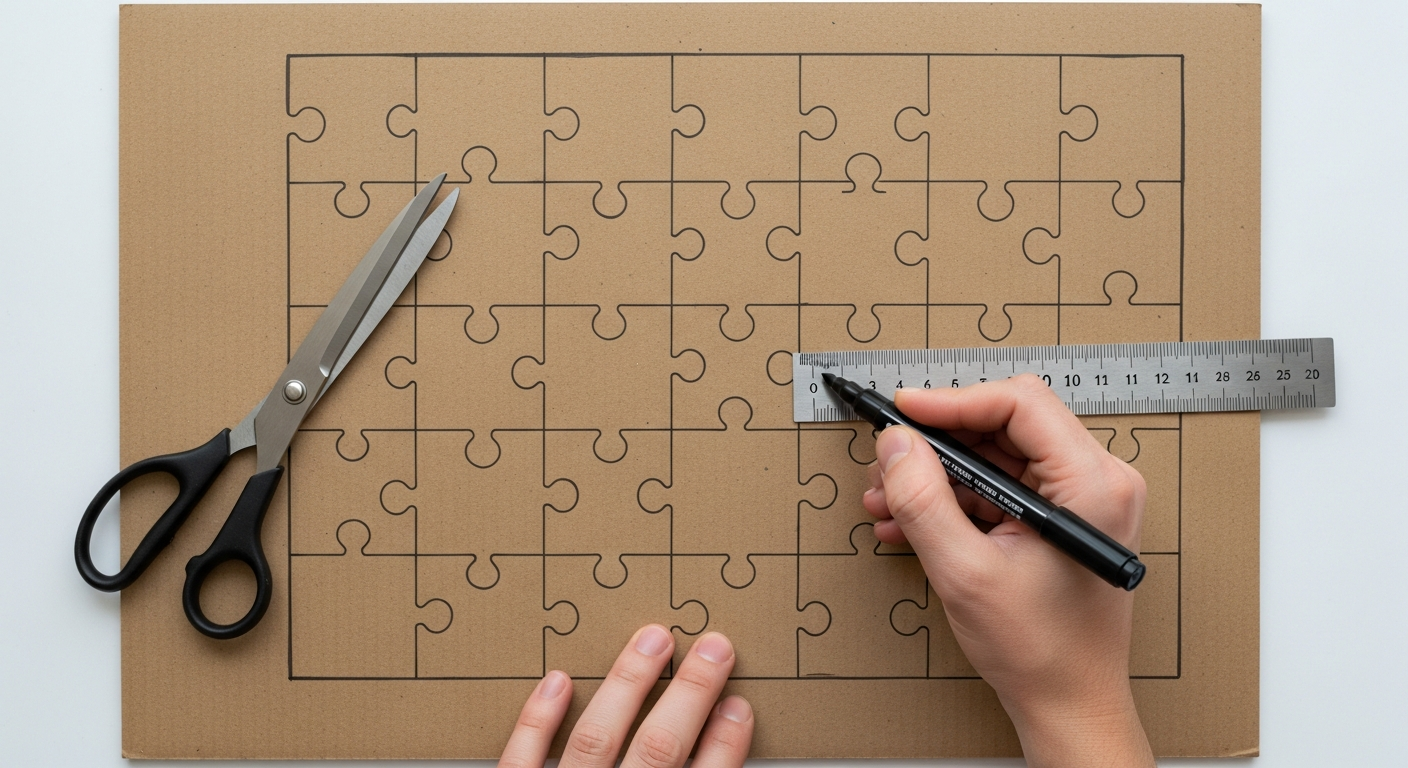
Now for the transformation! Turn your board over to the cardboard side to draw your cutting guides.
Cutting Patterns by Age:
- Toddlers: Draw a simple 2×2 grid (4 pieces) or 3×3 grid (9 pieces). Use straight lines or gentle curves.
- Preschoolers: Try 12-20 pieces. You can introduce the classic “knob and socket” puzzle shape, or just cut wavy, wandering lines.
- Older Kids: Go for 50+ pieces. You can use a craft knife (adults only!) to create intricate interlocking shapes.
Technique Tip: Don’t try to cut small pieces out of the big board. Cut the whole board into long strips first, then cut those strips into individual pieces. It gives you much better control.
Conclusion: A New Way to Play
By following these steps, you’ve turned a fleeting moment of creativity into a lasting object of play. These DIY puzzles make wonderful gifts for grandparents (they fit in a standard envelope!) or fun party favors.
So, the next time your fridge is overflowing, don’t throw that art away. Grab a cereal box and some glue, and turn it into a challenge!
Ready to start? Browse our popular coloring pages to find your next puzzle project!
Frequently Asked Questions (FAQ)
Q1: My paper wrinkled when I glued it. How do I fix it?
A: Unfortunately, once dried, wrinkles are hard to fix. For next time, try using a spray adhesive or a glue stick instead of liquid glue. If you must use liquid glue, spread it very thinly and press the project under heavy books immediately after mounting.
Q2: Can I use photos instead of coloring pages?
A: Absolutely! You can print family photos on cardstock and follow the same steps. They make excellent personalized gifts.
Q3: How do I store the puzzle pieces so they don’t get lost?
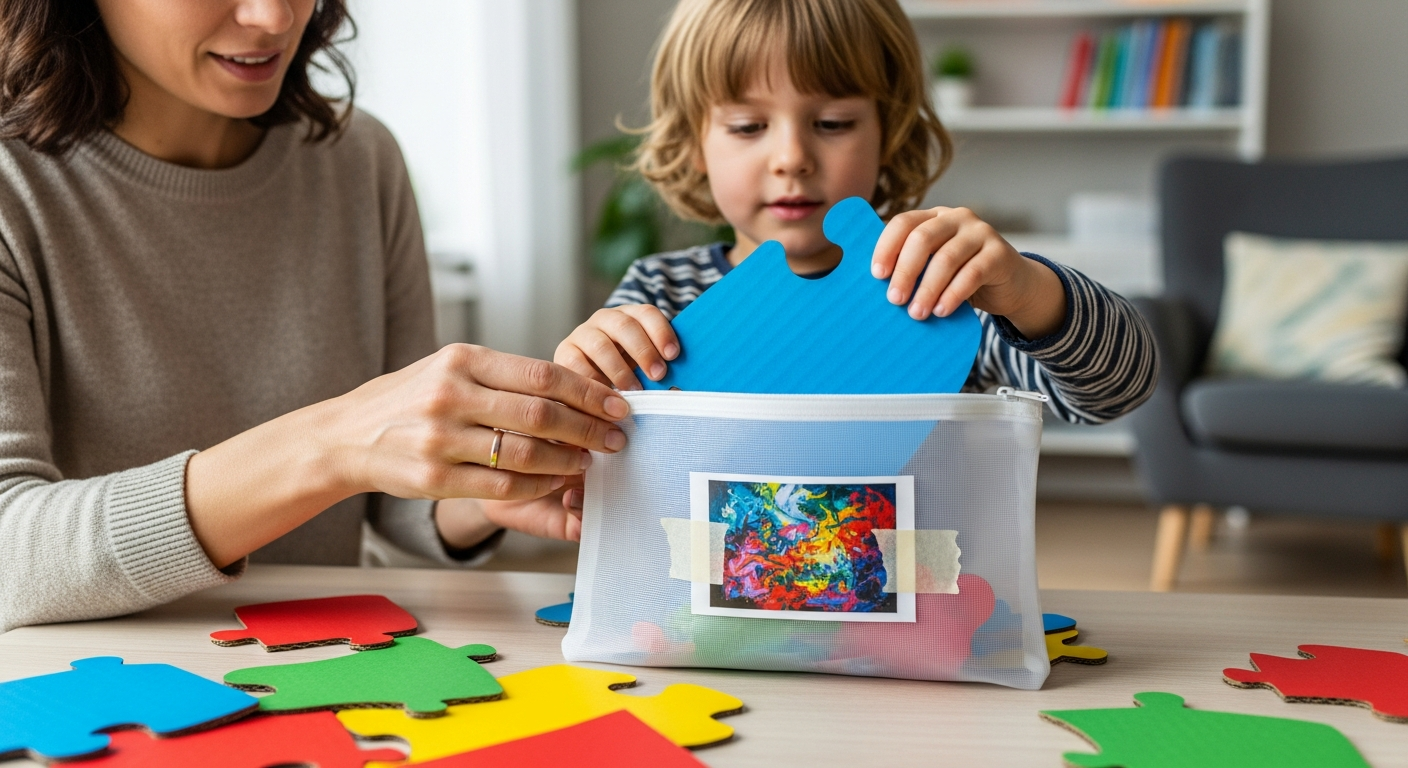
A: We recommend using mesh zippered pencil pouches or simple Ziploc bags. Cut out a small picture of the original image (or take a photo on your phone and print it) to tape to the bag so you know what the puzzle is supposed to look like.
Q4: Is it safe for kids to cut the cardboard?
A: Cereal box cardboard is thin enough for child-safe scissors, but it requires hand strength. Toddlers will need help, but school-aged children can usually handle it. Always supervise cutting activities.
Q5: What if I don’t have Mod Podge?
A: You can use clear packing tape! Carefully lay strips of clear wide tape over the artwork before cutting. It basically laminates the puzzle, making it super durable and waterproof.

Sophia Williams is the voice of the YoloColoring community. As our Content Editor, she crafts all the helpful articles, guides, and descriptions you read on the site. She is also our Community Manager, dedicated to connecting with users, celebrating their creations, and fostering a warm, supportive environment for all colorists.