In the contemporary landscape of digital hyper-connectivity, the human mind is subjected to an unprecedented barrage of stimuli. The average individual navigates a relentless stream of notifications, deadlines, and information overload, resulting in a pervasive state of low-level “fight or flight” arousal. This chronic overstimulation has precipitated a global rise in generalized anxiety disorders, burnout, and stress-related ailments. Within this context, the search for accessible, effective, and non-pharmacological interventions for mental health has led to a rediscovery of analog creative practices. Among these, the act of coloring – once relegated to early childhood education – has emerged as a scientifically validated tool for psychological regulation in adults.
This report serves as an exhaustive guide to the practice of Mindful Coloring, specifically focusing on the synchronization of breath and fine motor movement while engaging with YoloColoring’s printable Mandala coloring pages. Unlike passive consumption of media, coloring is an active process that bridges the gap between creativity and meditation. It functions as a “gateway practice” for mindfulness, offering the neurological benefits of meditation to those who find traditional stillness difficult to achieve.
By exploring the neurobiological mechanisms of art-making, the specific therapeutic properties of Mandalas, and the biomechanics of relaxation, this document aims to empower readers with a robust toolkit for anxiety relief. From the precise application of blending techniques to the intentional modulation of respiratory rhythms, every aspect of the coloring process can be optimized to transform a simple sheet of paper into a sanctuary of calm.
The Neurobiology of Coloring and Stress Reduction
To understand the efficacy of coloring as an anxiety intervention, it is necessary to examine the physiological cascade of the stress response and how artistic engagement interrupts it. The effectiveness of coloring is not merely anecdotal; it is rooted in the specific ways the brain processes repetitive visual and motor tasks.
The Amygdala and Cortisol Regulation
The amygdala, an almond-shaped cluster of nuclei located deep within the temporal lobes, serves as the brain’s primary threat detection center. In ancestral environments, the amygdala triggered the sympathetic nervous system in response to physical predators. In the modern environment, however, this system is frequently activated by psychological stressors – work emails, social pressures, and financial worries – resulting in chronically elevated levels of cortisol, the body’s primary stress hormone.
Research published in Art Therapy: Journal of the American Art Therapy Association indicates that coloring mandalas significantly reduces anxiety and cortisol levels more effectively than unstructured coloring or merely viewing art. When an individual engages in the structured task of coloring, attention is diverted away from the amygdala’s ruminative loops. The intricate nature of a mandala requires a level of focus that occupies the brain’s resources, effectively “jamming” the signal of anxiety. The mind cannot sustain a high-alert state regarding future hypotheticals while simultaneously making micro-decisions about color balance and staying within geometric boundaries. This distraction is not merely escapism; it is a physiological reset that allows the parasympathetic nervous system – the “rest and digest” mode – to reassert control.
Bilateral Hemispheric Synchronization
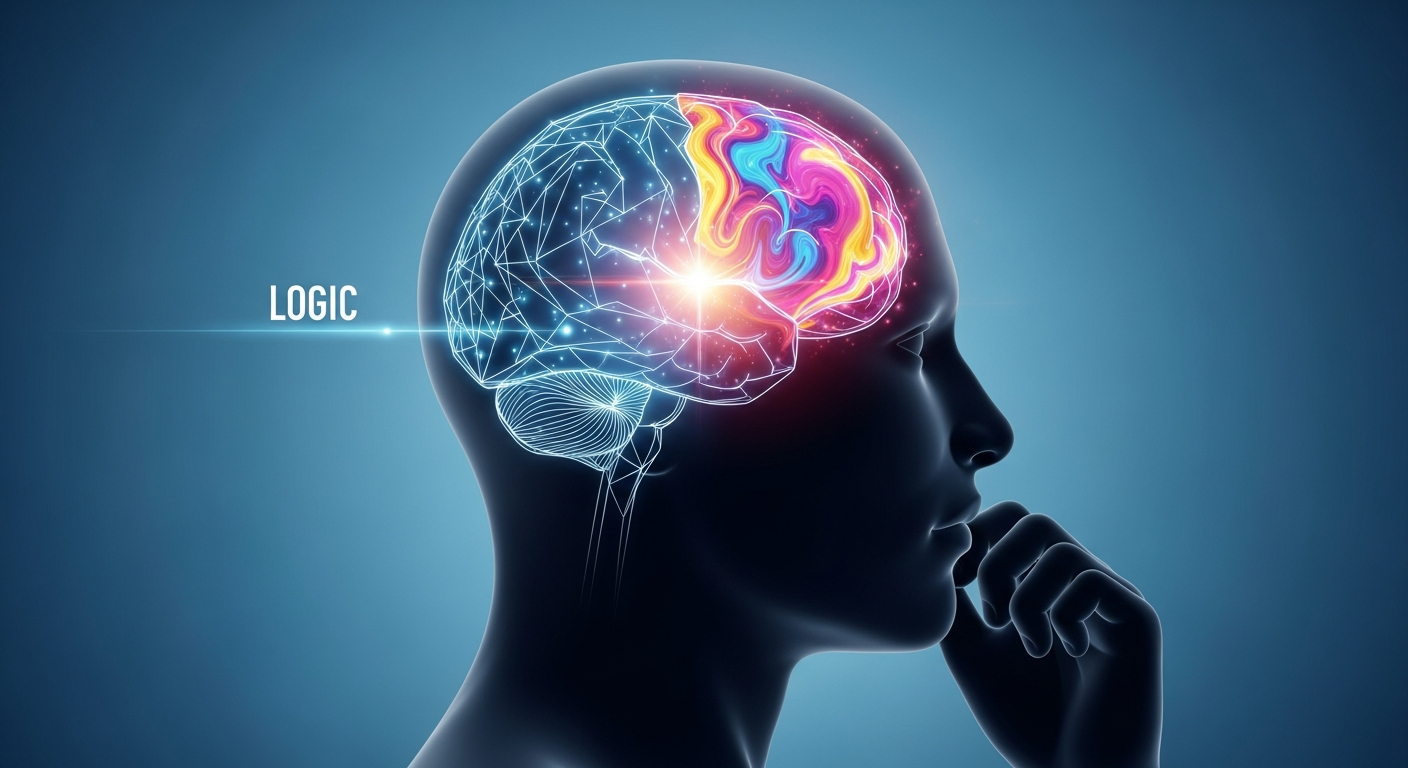
Coloring is a unique activity in that it necessitates the simultaneous engagement of both cerebral hemispheres, facilitating a state of “whole-brain” synchronization.
- The Left Hemisphere: This side of the brain is associated with logic, analysis, and sequence. During coloring, the left hemisphere is responsible for the structural aspects of the task: identifying the geometry of the mandala, planning the order of operations, and executing the precision required to keep the pigment within the pre-defined lines.
- The Right Hemisphere: Associated with creativity, intuition, and holistic processing, the right hemisphere is engaged through color selection, blending, and the aesthetic appreciation of the developing image.
When both hemispheres are activated in unison, the corpus callosum – the bundle of nerve fibers connecting the two sides – becomes highly active. This bilateral stimulation is analogous to mechanisms utilized in therapies such as EMDR (Eye Movement Desensitization and Reprocessing), which are used to process trauma. By engaging the logic of structure and the emotion of color simultaneously, coloring promotes a sense of cognitive coherence and psychological integration, often described by practitioners as a feeling of “coming back together” after feeling fragmented by stress.
The Psychology of Flow State
Psychologist Mihaly Csikszentmihalyi defined “flow” as a state of optimal experience where an individual becomes fully immersed in an activity, characterized by a loss of self-consciousness and a distortion of time. Flow is a powerful antidote to anxiety, which is fundamentally a disorder of self-consciousness and future-projection.
Coloring is particularly effective at inducing flow because it creates a “Goldilocks” condition for attention.
- Low Barrier to Entry: Unlike drawing or painting from a blank canvas, which can trigger performance anxiety (“I can’t draw”), coloring provides a pre-existing structure. The “fear of the blank page” is eliminated.
- High Engagement: Despite the pre-existing structure, the task is not passive. It requires constant, low-stakes decision-making regarding color theory, shading, and texture.
This balance between skill level and challenge is critical. If a task is too easy, the mind wanders to worries; if too hard, the mind becomes frustrated. Coloring maintains the mind in a “sweet spot” of engagement, allowing for the cessation of the internal chatter known as the Default Mode Network (DMN), which is often overactive in individuals with depression and anxiety.
Active Meditation vs. Passive Meditation
For many individuals, traditional mindfulness meditation – sitting in silence and observing the breath – can be paradoxically anxiety-inducing. The absence of external stimuli can cause the “monkey mind” to become louder. Art therapists refer to coloring as “active meditation”. It provides a somatic anchor (the movement of the hand) and a visual anchor (the filling of the space) for the mind. This makes the meditative state accessible to those who find stillness physically or mentally uncomfortable. The repetitive motion of the hand triggers a relaxation response similar to repeating a mantra, lowering heart rate and blood pressure.
The Therapeutic Power of the Mandala
While exploring the extensive collection at YoloColoring.com, users will notice a vast array of categories. However, for the specific purpose of anxiety relief, the Mandala holds a distinct and historically significant position. The term “Mandala” is derived from Sanskrit, meaning “circle,” and represents a spiritual and ritual symbol in Hinduism and Buddhism, representing the universe.
Jungian Psychology and the Circle
Swiss psychiatrist Carl Jung was among the first in Western medicine to recognize the therapeutic potential of the mandala. Jung observed that during periods of intense personal growth or psychological disintegration, he and his patients would spontaneously draw circular patterns. He posited that the mandala is an archetype of the “Self” – the totality of the conscious and unconscious mind.
- The Center: Represents the core identity or the grounded self.
- The Periphery: Represents the boundary between the self and the external environment.
- The Radial Symmetry: Represents the balance and integration of opposing forces.
For an individual suffering from anxiety, which often manifests as a feeling of internal chaos or fragmentation, the mandala offers a visual template of order. The act of coloring a mandala is, psychologically, an act of organizing the self. The symmetry provides a predictable, safe container where the mind can rest.
Empirical Evidence: Mandalas vs. Other Designs
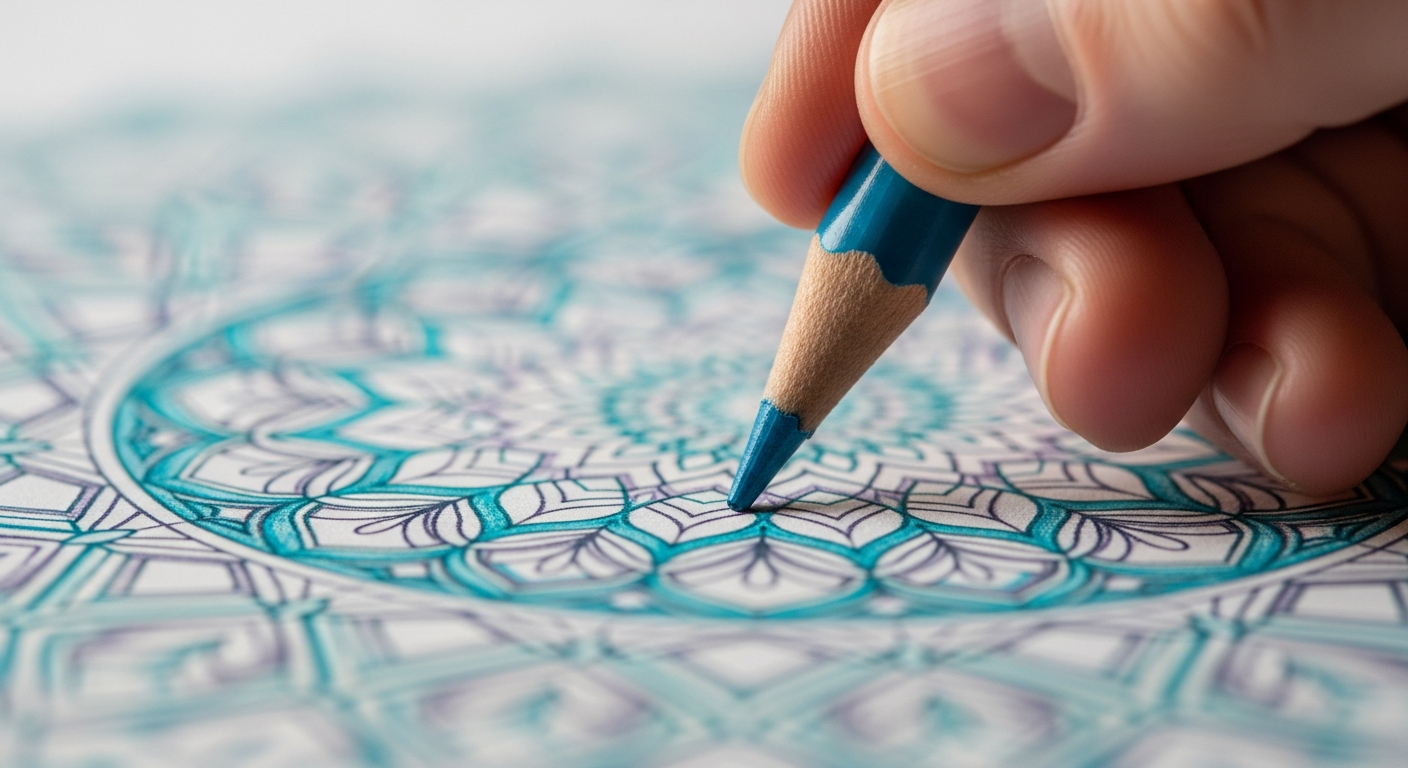
Scientific studies specifically comparing the anxiety-reducing effects of different coloring subjects have yielded clear results. Research involving university students and older adults has shown that coloring mandalas reduces anxiety scores significantly more than coloring on a blank page (free-form) or coloring asymmetrical scenes.
| Coloring Subject | Anxiety Reduction Potential | Mechanism of Action |
| Blank Paper | Low to Moderate | High cognitive load (what to draw?) can induce performance anxiety. |
| Plaid/Checkered | High | Repetitive structure induces trance; low emotional connection. |
| Mandalas | Highest | Combines the trance of repetition with the psychological safety of the circle and centering. |
The containment offered by the circular boundary is crucial. In art therapy, a defined border is associated with a sense of safety and containment of emotions. For someone feeling overwhelmed, the finite, enclosed spaces of a mandala provide a manageable “micro-world” that they can successfully control and complete.
The Symbolism of Centering
Mandalas are typically colored in one of two directional flows, each with different psychological implications:
- Centripetal (Outside-In): Coloring from the outer rim toward the center. This is recommended for individuals feeling scattered, overwhelmed, or manic. It visually and psychologically pulls energy inward, promoting grounding and introspection.
- Centrifugal (Inside-Out): Coloring from the center toward the rim. This is often suggested for individuals feeling stuck, depressive, or introverted. It promotes expansion, opening up, and connecting with the external world.
By consciously choosing the direction of coloring, the practitioner can align the activity with their immediate emotional needs.
Preparation: Designing the Environment for Mindfulness
Mindful coloring is distinct from casual coloring in its intentionality. The physical environment acts as a container for the practice, signalling to the nervous system that it is time to transition from “doing” mode to “being” mode.
Ergonomics and Physical Space
Tension in the body feeds anxiety in the mind. A common mistake is coloring while hunched over a coffee table or curled on a sofa, which compresses the diaphragm and restricts breathing.
- Seating: A supportive chair that allows feet to be placed flat on the floor is ideal for grounding. If sitting on the floor, using a cushion to elevate the hips helps maintain a straight spine.
- Lighting: Eye strain is a subtle stressor. Natural daylight is superior for color rendering and mood regulation. In the evening, warm-toned task lighting is preferable to overhead fluorescent lights, which can trigger cortisol release.
- Surface: A clear, flat surface is essential. Visual clutter in the peripheral vision competes for attention. Clearing the table before starting is part of the ritual of “clearing the mind”.
Tool Selection: The Sensory Experience
The choice of medium radically alters the tactile feedback (haptics) of the experience, which is a key component of mindfulness.
- Colored Pencils: Offer the most tactile resistance or “tooth.” This friction provides sensory feedback that can be very grounding. Pencils allow for varying pressure, which is essential for the breath-synchronization exercises discussed later. They are the tool of choice for detailed blending and shading.
- Gel Pens: Provide a frictionless, fluid experience. The ink flows without pressure, which can be beneficial for individuals with hand pain or arthritis. The vibrant, wet ink offers immediate visual gratification but requires patience to dry.
- Alcohol Markers: Markers like Copic or Ohuhu offer deep, streak-free saturation. The smell (if not non-toxic) should be managed with ventilation. The sound of a marker on paper – a rhythmic “squeak” – can become an auditory anchor. Markers are excellent for those who want to fill large spaces quickly and see bold results.
Intention Setting
Before the first mark is made, a moment of pause is required to shift from autopilot to awareness. This is known as “setting the intention.” It transforms the session from a pastime into a practice. Intention Prompts:
- “I am coloring to release the tension of the workday.”
- “I am using this time to practice patience with myself.”
- “I permit myself to be imperfect.”
- “I am focusing on the sensation of the pencil on the paper.”
Writing this intention on the back of the coloring sheet creates a contract with oneself, reinforcing the purpose of the session.
The Core Practice: Breath and Movement Synchronization
This section addresses the primary focus of this report: “Hướng dẫn thực hành chánh niệm: Tập trung vào hơi thở và chuyển động tay” (Mindfulness practice guide: Focus on breathing and hand movements). Most individuals color with shallow breath and a tight grip, mirroring their internal stress. The goal of this practice is to reverse that pattern by linking the respiratory rhythm to the motor action.
The Physiology of the Vagus Nerve
Deep, slow exhalation stimulates the Vagus Nerve, which runs from the brainstem to the abdomen. This stimulation activates the parasympathetic nervous system, slowing the heart rate and lowering blood pressure. By forcing the hand to move in sync with a slow breath, we force the breath to slow down, which in turn forces the mind to calm. This is a biofeedback loop.
Exercise 1: The Inhale-Lift, Exhale-Stroke Technique
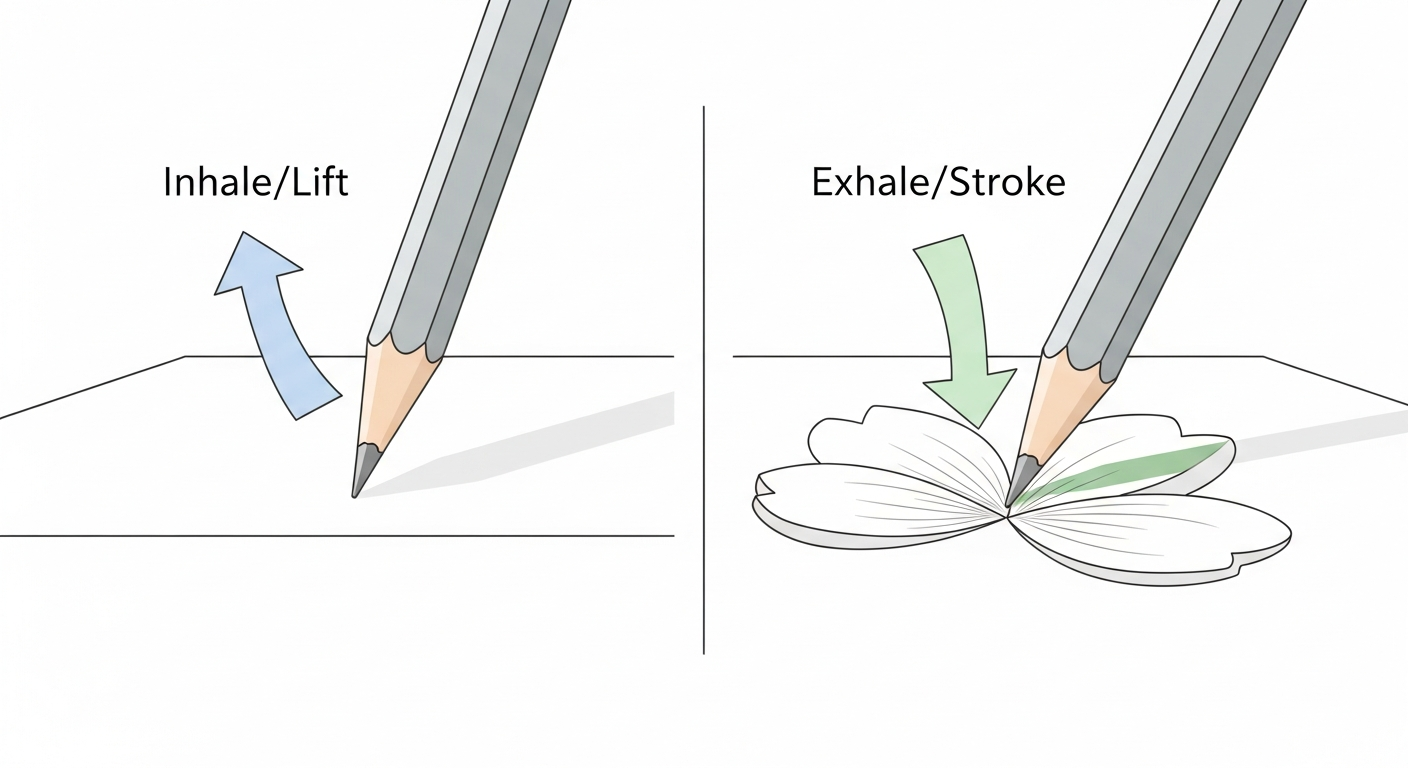
This exercise is designed for mandalas with repetitive, discrete sections (e.g., petals or leaves) available at YoloColoring.com.
Step-by-Step Guide:
- Posture Check: Sit upright. Feet flat. Shoulders dropped away from ears.
- Focus: Select one specific shape within the mandala.
- The Inhale (Preparation): Inhale slowly through the nose for a count of 4. As you inhale, hover the pencil tip just above the paper. Do not touch it. Visualize drawing the energy/breath into your hand.
- The Exhale (Action): Exhale slowly through the mouth (pursed lips, like blowing a straw) for a count of 6. As you begin the exhale, lower the pencil and color the shape.
- Constraint: You must color only while exhaling. If you run out of breath before the shape is filled, stop moving.
- The Pause: At the end of the exhale, lift the pencil. Rest in the stillness for 2 seconds.
- Repeat: Inhale (Hover) -> Exhale (Color) -> Pause.
Insight: This technique physically prevents “rushing.” The hand wants to move fast, but the breath dictates the pace. This creates a powerful cognitive brake on racing thoughts.
Exercise 2: Continuous Line Breathing (The Flow)
For larger areas or circular backgrounds, a continuous motion is used to induce a trance state.
Step-by-Step Guide:
- Motion: Begin a circular scrubbing motion (scumbling) with your pencil.
- Rhythm: Establish a breath cycle of 4-in, 4-out.
- Pressure Modulation:
– Inhale: Lighten the pressure on the pencil. The color becomes faint/whispery.
– Exhale: Deepen the pressure. The color becomes saturated/bold.
- Visual Feedback: The result on the paper will be a pulsing pattern of light and dark, creating a visual record of your breathing rhythm. This turns the coloring page into a “breath map”.
Exercise 3: Color Visualization Breathing
This technique incorporates cognitive visualization with physical action, useful for emotional processing.
Step-by-Step Guide:
- Select Two Colors:
– Color A (Release): Represents stress, anger, or worry (e.g., grey, jagged red).
– Color B (Intake): Represents calm, joy, or safety (e.g., cool blue, soft yellow).
- The Out-Breath: When exhaling, use Color A on the outer edges of the mandala. Visualize the stress flowing out of your shoulder, down your arm, through the pencil, and being trapped permanently in the paper.
- The In-Breath: When inhaling, simply look at Color B (or color the center with it). Visualize this color filling your lungs and expanding into your chest.
- Integration: As the session progresses, gradually use less of Color A and more of Color B, symbolizing the shift in your internal state.
Mindful Movement and Fine Motor Skills
Anxiety often manifests somatically as “bracing” – a rigid musculoskeletal state. Hands clench, jaws tighten, and shoulders rise. Mindful coloring uses fine motor tasks to retrain the body to move with ease rather than tension.
Grip Dynamics and Ergonomics
A “death grip” on the pencil is the most common physical manifestation of stress during coloring.
- The Check: Every 5 minutes, pause and look at your fingers. Are the knuckles white? Is there a dent in your middle finger?
- The Correction: Shift your grip back. Hold the pencil 1-2 inches further away from the tip than you would for writing.
- Effect: This reduces leverage, making it impossible to press too hard. It forces the movement to come from the elbow and shoulder rather than the small, tense muscles of the wrist. This “loose grip” encourages broader, more sweeping strokes that are inherently more relaxing than tight, cramped scratching.
Bilateral Drawing Warm-Up
Before starting a detailed mandala, a bilateral drawing exercise can help synchronize the brain and relax the body.
- Technique: Tape a piece of scrap paper to the table. Take a pencil in each hand.
- Action: Draw large symmetrical circles with both hands simultaneously, moving outwards from the center.
- Benefit: This feels awkward initially, which forces the brain out of “autopilot.” It engages gross motor skills (large movements) which helps release large muscle tension in the shoulders before focusing on fine motor skills.
Fine Motor Skills for All Ages
Engaging fine motor skills has cognitive benefits across the lifespan.
- For Adults: It maintains dexterity and hand-eye coordination often lost to typing/swiping.
- For Seniors: Large-print coloring sheets for seniors. Coloring is used in occupational therapy to maintain grip strength and delay the onset of dementia-related motor decline. The focus required stimulates the frontal lobe, aiding in attention and organizational skills.
Art Techniques for Mindfulness: Blending and Texture
While the goal of mindful coloring is not artistic perfection, learning proper techniques serves a mindfulness purpose: it deepens the “Flow” state. When the brain is engaged in a technical challenge (like creating a smooth gradient), it has zero bandwidth left for anxiety. This section serves the “art education expert” requirement of the prompt.
Colored Pencil Blending Techniques
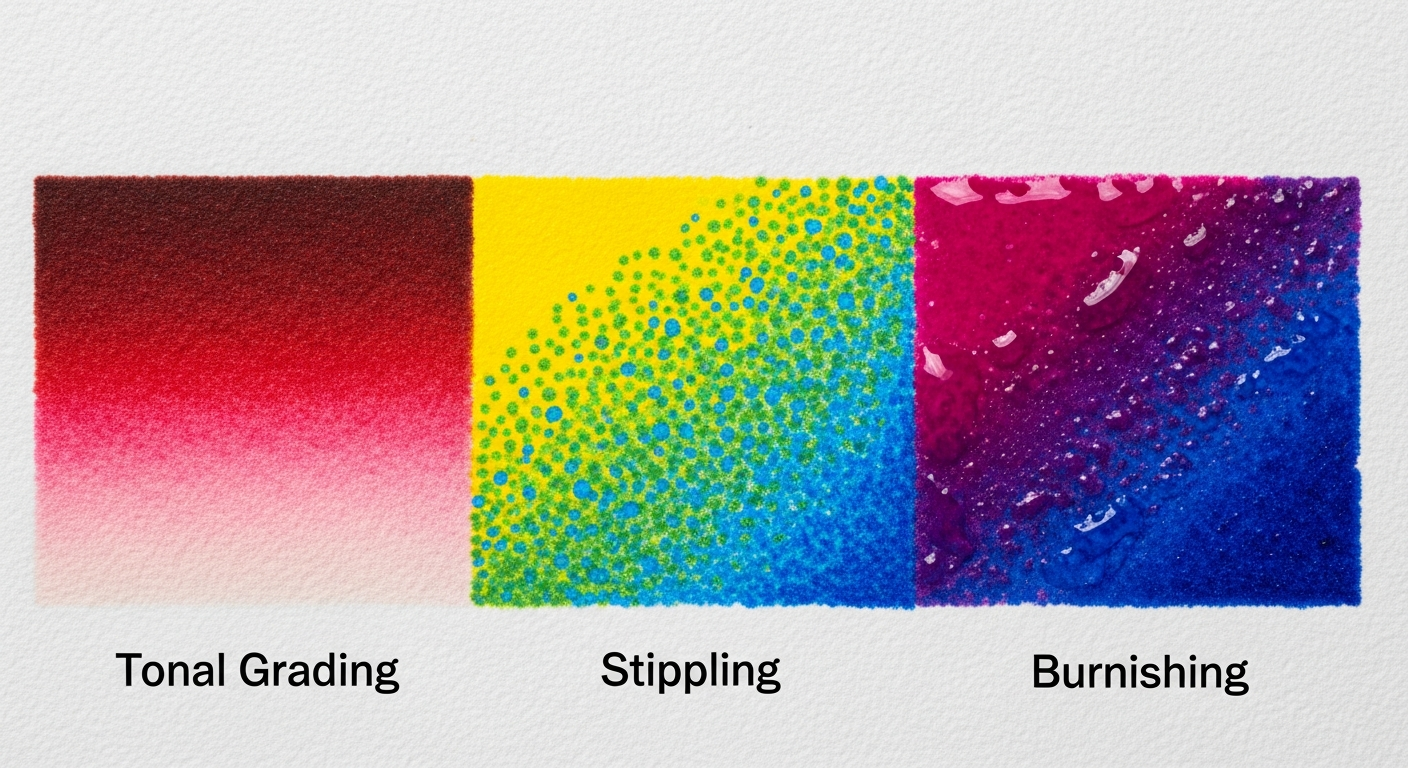
Layering colors creates depth and luminosity, transforming a flat image into something that feels alive.
Technique A: Tonal Grading (The Pressure Scale)
This is the practice of fading a single color from dark to light.
- Heavy Pressure: Start at the edge of the shape. Press firmly (but do not snap the tip) to create a dark, saturated line.
- Medium Pressure: As you move inward, ease off. The white of the paper should start to show through slightly (the “tooth”).
- Light Pressure: Feather the stroke out until it is barely touching the paper, fading into white. Mindfulness Application: This requires acute sensitivity to muscle tension. It is a practice in control and release.
Technique B: Optical Mixing (Stippling)
Instead of rubbing colors together, use dots.
- Fill an area with dots of Yellow.
- Add dots of Blue in the spaces between.
- From a distance, the eye blends them to see Green. Mindfulness Application: The repetitive “tap-tap-tap” motion is hypnotic. It is incredibly slow, forcing the practitioner to accept a slower pace of life. It is excellent for “racing thoughts” as it demands a singular, microscopic focus.
Technique C: Burnishing
Burnishing involves layering colored pencil until the paper’s tooth is completely filled, creating a shiny, painterly surface.
- Layer your colors normally.
- Take a Colorless Blender or a white pencil.
- Press down hard and color over the entire area. Mindfulness Application: Burnishing is a high-energy release. It allows for the safe expression of frustration or aggression through physical exertion, resulting in a smooth, polished finish.
Alcohol Marker Blending
Alcohol markers are beloved for their smooth, professional look.
- The Flick: Do not color back-and-forth. Use a flicking motion, lifting the marker off the page at the end of the stroke. This creates a feathered edge that blends easily.
- Wet-on-Wet: To blend two colors, you must work fast. Apply the light color, then immediately apply the dark color while the ink is wet. Then, go back over the boundary with the light color. The alcohol acts as a solvent, melting the dyes together.
- Mindfulness Application: This teaches impermanence and timing. You must be present; if you wait too long, the ink dries and the blend fails. It trains the mind to act decisively in the present moment.
Color Psychology and Intention
Color is not merely decorative; it is a language of emotion. In Art Therapy, the colors chosen by a client often reveal their internal state. In Mindful Coloring, we can use color proactively to shift that state.
The Language of Color
- Cool Colors (Blue, Green, Purple): Biologically, these colors are associated with nature (water, foliage, sky). They are “receding” colors, creating a sense of space and distance.
Use for: Anxiety, anger, overstimulation, high blood pressure. They cool the emotional temperature.
- Warm Colors (Red, Orange, Yellow): These are “advancing” colors that appear closer to the eye. They are stimulating and energizing.
Use for: Depression, lethargy, lack of motivation, fatigue. They warm the emotional spirit.
- Neutral/Earth Tones (Brown, Beige, Grey): These represent grounding, stability, and reliability.
Use for: Feeling “unmoored” or flighty. They provide a sense of solid ground.
Intuitive Color Selection
Instead of planning a palette based on color theory, try Intuitive Selection.
- Close your eyes.
- Hover your hand over your pencils/markers.
- Pick one without looking.
- Use that color. Insight: This bypasses the analytical brain (which worries about “what looks good”) and taps into the subconscious. It is a practice in trusting your gut and accepting the outcome, a key skill in managing anxiety.
Overcoming Perfectionism: The Inner Critic
A significant barrier to coloring for mental health is the Inner Critic – the voice that says, “You are doing it wrong,” “This looks ugly,” or “You are wasting time.” This voice is the very source of anxiety. Coloring provides a low-stakes arena to confront and dismantle it.
The “Ugly Page” Exercise
If perfectionism is paralyzing you, deliberately create an “Ugly Page.” Download a free abstract coloring page from YoloColoring specifically for this purpose.
- Choose colors that clash (e.g., neon orange and swamp green).
- Color outside the lines.
- Scribble.
- Tear the paper slightly. The Lesson: Observe that the world did not end. You are safe. The anxiety about making a mistake is often worse than the mistake itself. By intentionally failing, you inoculate yourself against the fear of failure.
Process Over Product
In Art Therapy, a distinction is made between “Process” and “Product.”
- Product: The final object. Is it pretty? Is it frame-worthy?
- Process: The experience of making it. Did I breathe? Did I feel the pencil? Mindful coloring values Process 100% over Product. You are not making art; you are making peace. If the page is a mess but you felt calm while doing it, the session was a total success. Conversely, if the page is a masterpiece but you stressed over every detail, the session failed its therapeutic purpose.
“Non-Dominant Hand” Coloring
If you find yourself trying to control the outcome too much, switch the pencil to your non-dominant hand.
- You cannot be precise. You have to let go of control.
- This forces a childlike, humble state of mind that is often very liberating for high-functioning, Type-A personalities.
Coloring for the Whole Family
Anxiety is not exclusive to adults. Children today face high levels of stress, and coloring can be a powerful co-regulation tool for parents and kids.
Co-Regulation through Art
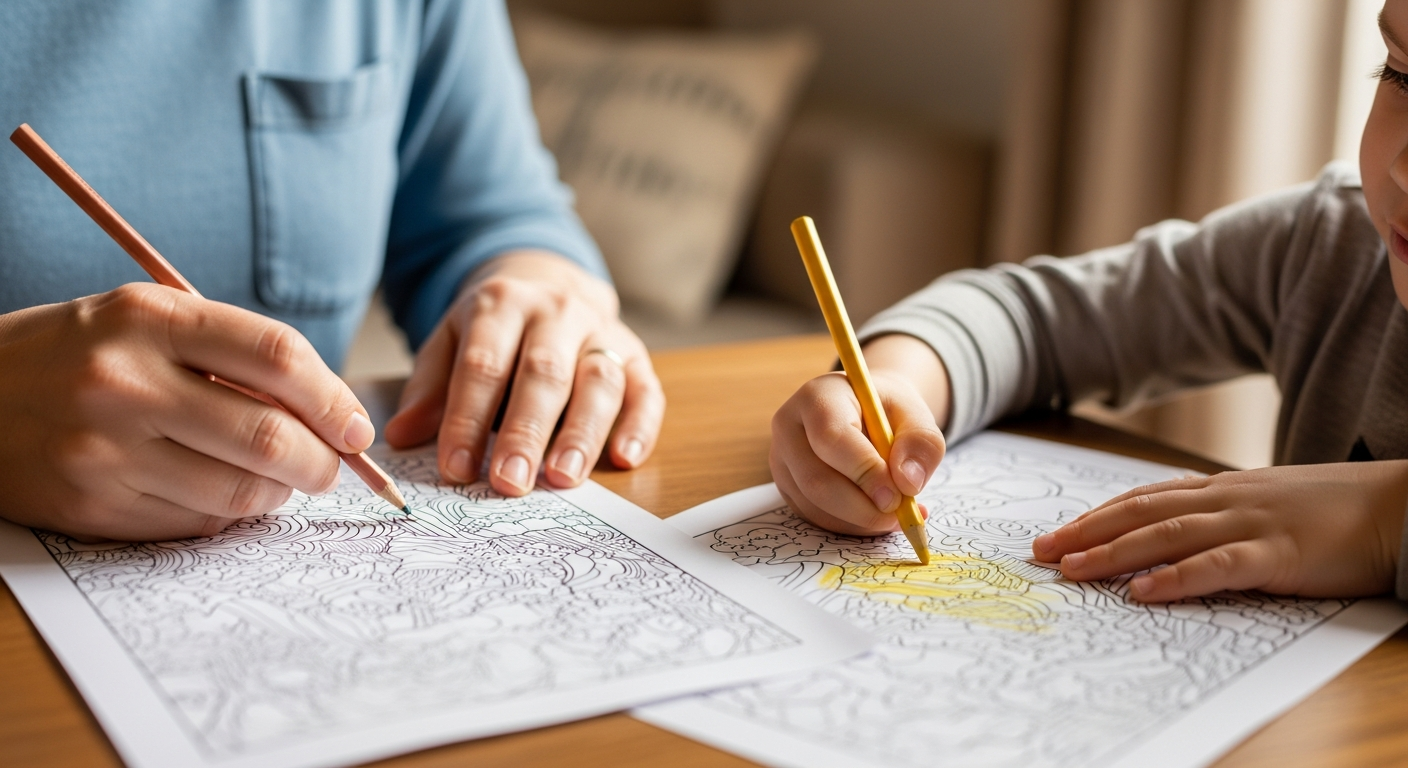
Children learn to regulate their emotions by watching their parents. When a parent sits down to color calmly, they model self-soothing behavior.
- The Setup: Print two copies of the same YoloColoring page.
- The Activity: Sit side-by-side. Do not instruct the child. Just color your own page mindfully. The child will naturally mimic your calm breathing and focus. This is “parallel play” and creates a safe space for conversation to arise naturally without eye contact, which often helps kids open up about their worries. If your child struggles with artistic confidence, use this time to apply strategies that encourage creativity in kids who believe they cannot draw.
Emotional Literacy Tools
Use coloring to teach kids to identify emotions.
- “Color Your Heart”: Draw a heart shape. Ask the child to fill it with colors that show how they feel today. “How much is blue (sad)? How much is red (mad)?” This externalizes the emotion, making it manageable.
Conclusion
The resurgence of coloring is not a fleeting trend; it is a collective intuitive response to a world that has become too loud, too fast, and too demanding. It is a reclamation of the analog in a digital age.
By engaging in Mindful Coloring, specifically through the use of Mandalas and breath synchronization, you are not merely filling in shapes. You are:
- Regulating your nervous system via the Vagus Nerve.
- Quieting the amygdala and lowering cortisol.
- Synchronizing your brain hemispheres for cognitive coherence.
- Practicing self-compassion by silencing the inner critic.
We invite you to visit YoloColoring.com to explore our library of free resources. Choose a design that speaks to you – whether it is a complex geometric mandala for deep focus or a simple nature scene for gentle relaxation.
Remember: The goal is not to finish the page. The goal is to arrive at the present moment.
Grab your pencils. Take a deep breath. Let the colors flow.
Frequently Asked Questions (FAQ)
1. How long do I need to color to feel anxiety relief?
Research suggests that a minimum of 20 minutes is the threshold for measurable cortisol reduction. However, even shorter sessions of 5-10 minutes can serve as an effective “pattern interrupt” to break a cycle of panic or ruminative thinking. Consistency is more important than duration; a daily 10-minute practice is more effective than a weekly hour-long session.
2. Why are Mandalas considered better for anxiety than landscapes or characters?
Mandalas offer a unique combination of symmetry and containment. The circular boundary provides a psychological sense of safety (a “safe container”), while the repetitive, symmetrical patterns allow the brain to enter a predictive, trance-like state. Landscapes or characters require more cognitive processing (e.g., “Does this tree look realistic?”), which can trigger perfectionism and performance anxiety.
3. I am not artistic and I worry my coloring will look bad. How do I get past this?
This is a common barrier known as “Creative Anxiety.” The solution is to shift your goal from “creating art” to “practicing mindfulness.” Try the “Ugly Page” exercise: intentionally use colors you dislike or scribble to prove to your brain that nothing bad happens when the result is imperfect. Remember, in mindful coloring, the feeling of the pencil on the paper is the point, not the picture itself.
4. Can I use digital coloring apps for mindfulness?
Yes, but with caveats. YoloColoring.com offers digital tools that are excellent for convenience. However, traditional coloring on paper offers tactile feedback (haptics) – the friction of pencil on paper – which is biologically grounding. Digital screens also emit blue light, which can be stimulating. If using digital tools, turn down the brightness and focus on the rhythm of the “tap-to-fill” action to maintain mindfulness.
5. What is the best breathing technique to use while coloring?
The most effective technique for anxiety is exhalation extension. Try the “4-6 Rhythm”: Inhale for a count of 4 while hovering your pencil; exhale for a count of 6 while making your stroke. Extending the exhalation activates the parasympathetic nervous system, physically forcing your body to relax.

Sophia Williams is the voice of the YoloColoring community. As our Content Editor, she crafts all the helpful articles, guides, and descriptions you read on the site. She is also our Community Manager, dedicated to connecting with users, celebrating their creations, and fostering a warm, supportive environment for all colorists.