
Does this scenario sound familiar? It’s 4:00 PM. The school bag is on the floor, the shoes are kicked off, and instead of unwinding, your child is bouncing off the walls. Or perhaps it’s 7:30 PM, and the “bedtime battle” is just beginning. As parents, we often face the paradox of the modern child: they are exhausted yet hyperactive, craving rest but unable to sit still.
This common friction point is what experts call “post-school restraint collapse” or simply overstimulation. The brain is crying out for a reset button. While it’s tempting to hand over a tablet, screens often add to the sensory overload. The solution might be simpler, quieter, and far more creative: a structured coloring routine.
At YoloColoring.com, we believe coloring is more than just keeping kids busy. It is a powerful neurological tool that can bridge the gap between high-energy play and deep rest. In this guide, we’ll show you how to build a “Quiet Time” habit that helps your child calm down, develop fine motor skills, and discover the joy of art – all using our library of free printable coloring sheets.
Why Coloring is the Secret to Regulating Energy
Before we dive into the “how-to,” let’s look at the “why.” When a high-energy child struggles to settle, their amygdala (the brain’s stress center) is often in overdrive. Asking them to “just sit still” fights against their biology.
Coloring offers a “backdoor” to relaxation. It engages the brain in a repetitive, low-stakes task that requires focus but not high-level stress processing. This shift induces a “flow state” – a psychological zone where time seems to slow down, and the nervous system shifts from “fight or flight” to “rest and digest.” This physiological shift is the key to understanding how to use coloring pages for emotional regulation.
Furthermore, the colors themselves matter. This concept, known as chromotherapy, suggests that cool colors like blues and greens can lower heart rates, while warm reds and oranges can be stimulating. By curating the right coloring pages and tools, you can subconsciously guide your child toward peace.
Step 1: Designing the “Quiet Time” Architecture
Success lies in the setup. If you toss a box of broken crayons on a cluttered table, you likely won’t get the results you want. Here is how to engineer the environment for success.
The “Golden Windows” for Coloring
Timing is everything. Try to implement this routine during two specific transition periods:
- The Post-School Decompression: A 20-minute bridge between the busyness of school and the evening at home.
- The Pre-Bedtime Ritual: A 30-45 minute screen-free wind-down. Unlike blue light from screens which inhibits sleep hormones, coloring under warm light naturally preps the brain for sleep.
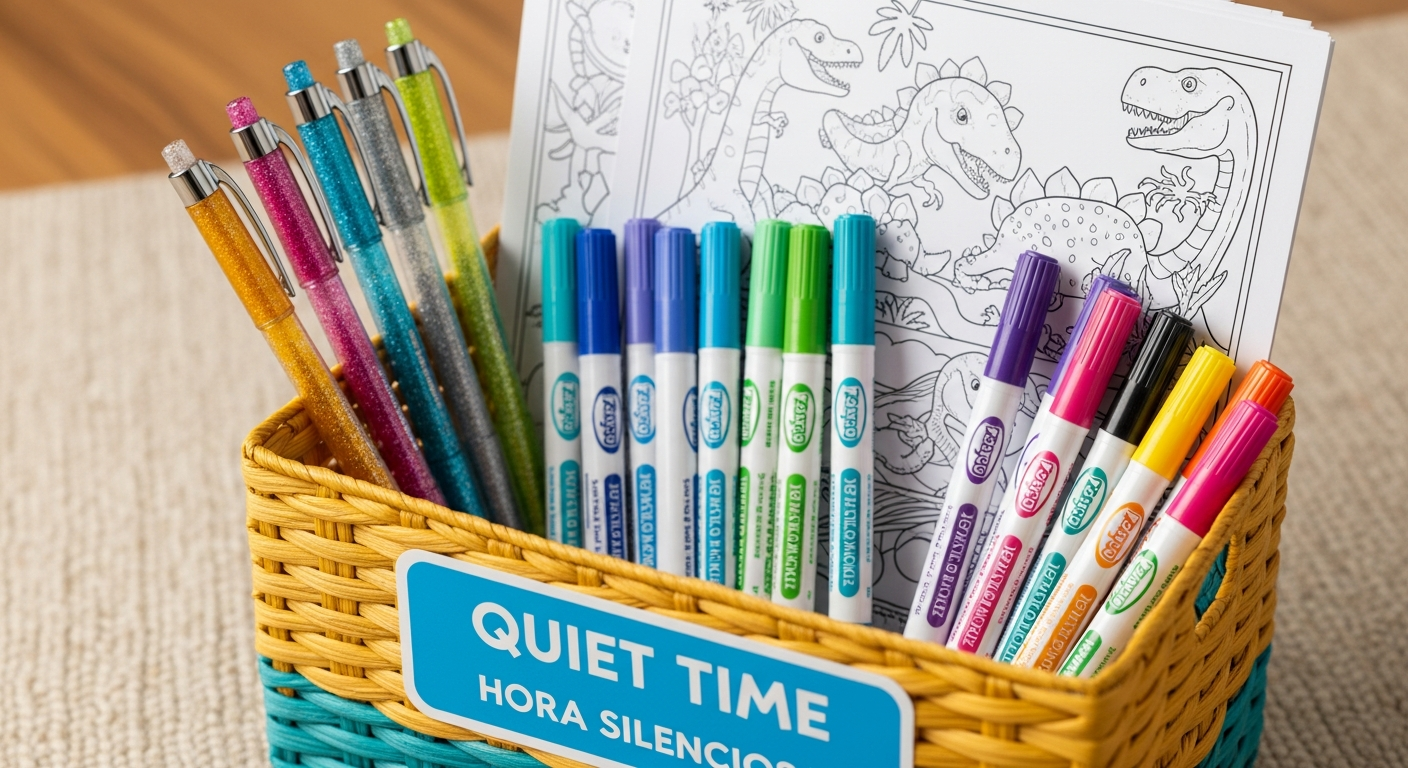
The “Quiet Time Bin”
Novelty creates focus. Create a special box or bin that comes out only during Quiet Time.
- Exclusive Supplies: Include special gel pens, scented markers, or high-quality printable coloring sheets that aren’t available during normal play.
- Rotation: Swap out the coloring themes weekly. One week could be Dinosaur & Prehistoric, and the next could be Ocean Animal Coloring Pages.
Engineered Seating
For high-energy kids, sitting in a chair can feel like torture.
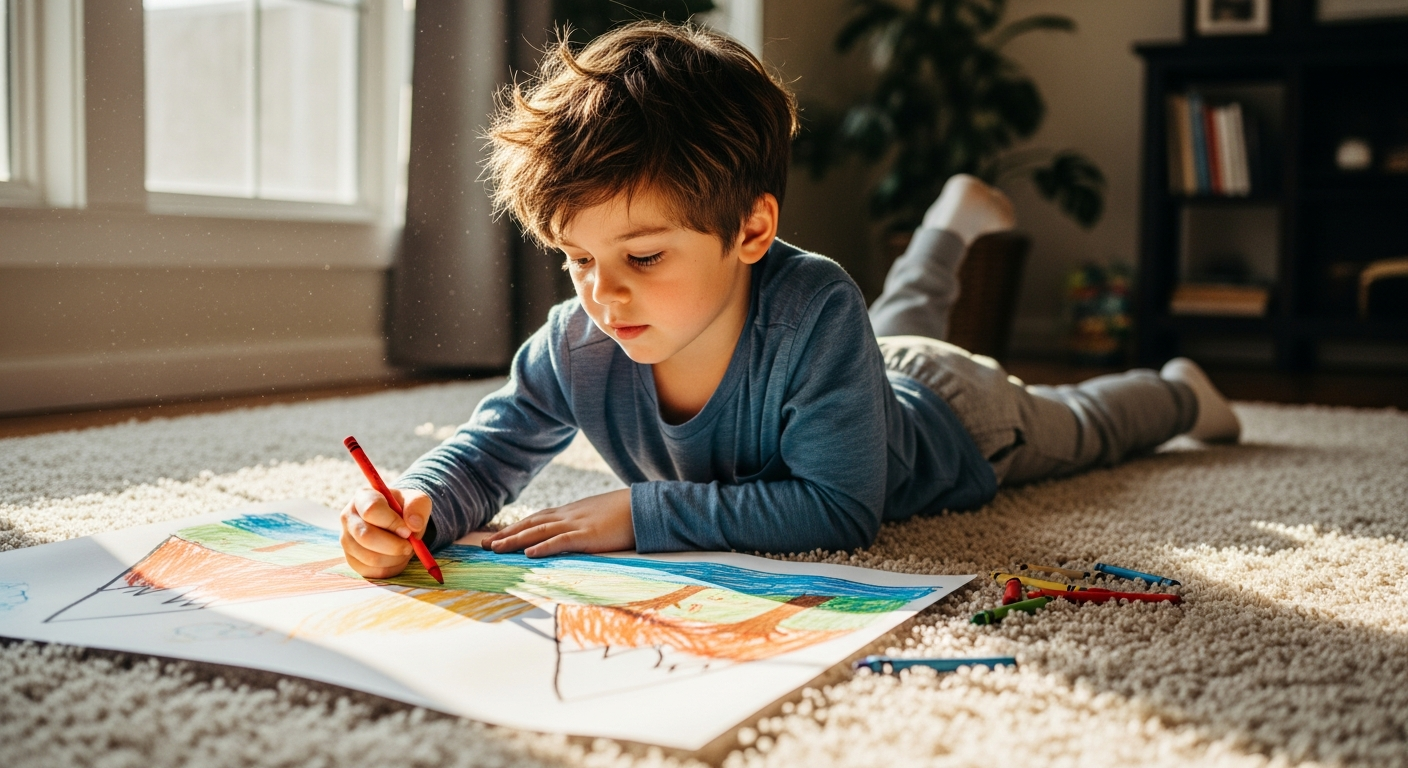
- Floor Time: Let them lie on their stomachs while coloring. This “prone position” provides calming pressure to the core and improves shoulder stability.
- Vertical Coloring: Tape a coloring sheet to the wall. Standing up while coloring allows them to wiggle while focusing their hands.
Step 2: The Curriculum of Calm (Teaching Techniques)
One reason kids reject coloring is boredom. Filling in spaces can feel repetitive. To engage a busy brain, we need to elevate “coloring” to “art.” Teach them these simple techniques to challenge their focus.

1. Blending and Shading
Turn a flat image into a 3D masterpiece. Teach your child to press hard for dark colors and gradually lift the pressure to fade into white.
Tip: Use Space & Planet to practice making a circle look like a sphere using gradients. This builds fine motor skills and teaches pressure control.
2. Texture Techniques (Stippling & Hatching)
If they are bored of rubbing back and forth, show them “stippling.” This involves making hundreds of tiny dots to fill a space. The rhythmic tap-tap-tap motion is incredibly soothing and distinct from scribbling.
3. The Magic of Mandalas
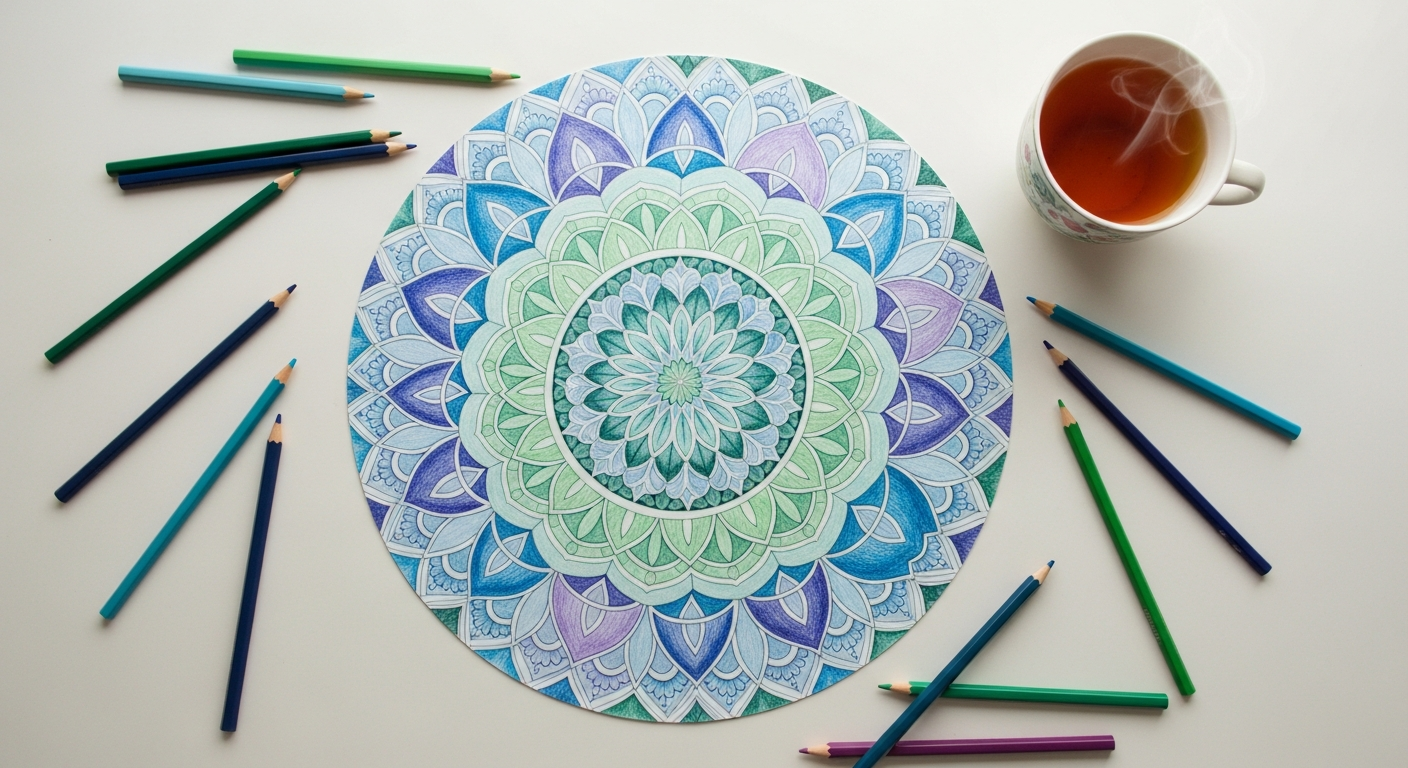
For the child who doesn’t know what to draw, Mandalas are a lifesaver. These symmetrical, geometric patterns provide a clear roadmap. The repetitive nature of coloring a Mandala is proven to reduce anxiety and induce a meditative state.
Step 3: Tailoring for the High-Energy or ADHD Brain
If your child has ADHD or sensory processing needs, standard advice might not work. Their brains often hunt for dopamine. Here is how to adapt the routine:
- Add “Heavy Work”: Before sitting down to color, have them do 10 “chair push-ups” or carry the heavy box of crayons to the table. This physical effort helps regulate their sensory system.
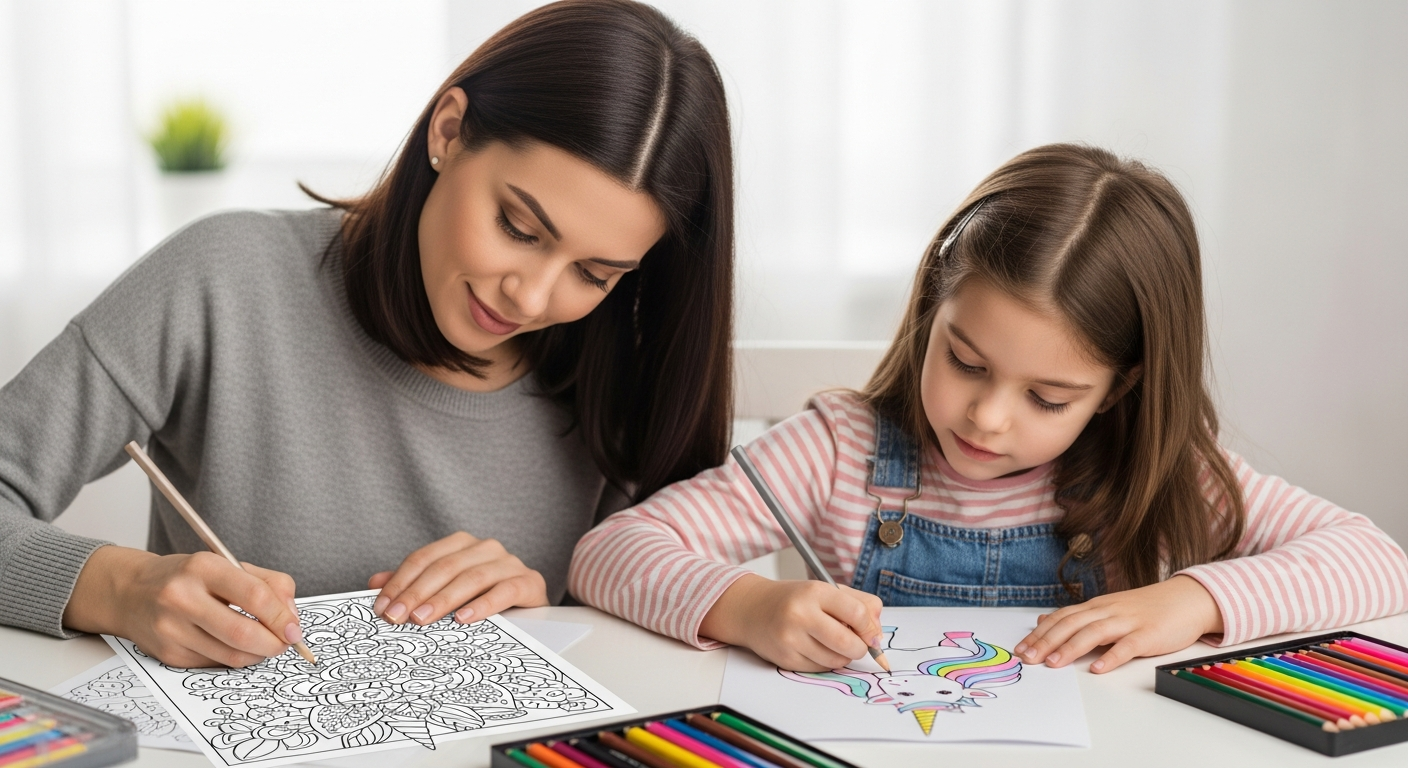
- Body Doubling: Sit next to them. You don’t need to instruct them; just your calm presence coloring your own sheet (perhaps one of our [Link to: Adult Coloring Pages]) can act as an anchor for their attention.
- Visual Timers: “20 minutes” is an abstract concept to a child. Use a visual timer or a sand hourglass so they can see exactly how much “Quiet Time” is left.
Start Your Routine Today
Building a “Quiet Time” routine is an investment in your child’s ability to self-regulate. It’s not just about getting a quiet house (though that is a nice bonus!); it’s about giving your child a lifelong tool to manage stress and express creativity.
Start small. Aim for just 10 minutes today. Print out a fresh stack of coloring pages from YoloColoring.com, set up a cozy corner, and watch the calm settle in.
Ready to get started? Explore our most popular collections here: Cute Animals Collection
Frequently Asked Questions (FAQ)
1. How long should “Quiet Time” last?
Start with 10-15 minutes if your child is new to the routine. Most experts suggest that 45-60 minutes is the “sweet spot” for restorative rest, but build up to this gradually using a timer.
2. My child says they “hate” coloring. What should I do?
Change the medium! If crayons are “boring,” try oil pastels, gel pens, or even “paint sticks” which dry instantly. Also, ensure the content interests them. If they love Minecraft or Dinosaurs, find those specific printable coloring sheets rather than generic images.
3. Should I force them to stay in the lines?
No. For relaxation, the process is more important than the product. Forcing precision can cause anxiety. If you want to help them with boundaries without nagging, try tracing the outline of the image with a thick black marker or even glitter glue to create a physical “bumper”.
4. Can I use screens during Quiet Time?
Ideally, no. Screens emit blue light and provide rapid stimulation, which is the opposite of the “calm down” goal. Audiobooks or soft music are great companions to coloring that keep the eyes resting from digital glare.
5. Where can I find free coloring pages for this routine?
You are in the right place! YoloColoring.com offers thousands of free, high-quality printable coloring pages for all ages and interests. Check out our Latest Coloring Pages to start your collection.

Sophia Williams is the voice of the YoloColoring community. As our Content Editor, she crafts all the helpful articles, guides, and descriptions you read on the site. She is also our Community Manager, dedicated to connecting with users, celebrating their creations, and fostering a warm, supportive environment for all colorists.