
Ever found crayon marks on the wall or – worse – caught your toddler chewing on a marker? You’re not alone. Little ones love to scribble and explore, but they also tend to put art supplies in their mouths. That’s why choosing safe, non-toxic art supplies is so important for parents. Not only will the right materials prevent potential poisoning or allergic reactions, they’ll also clean up more easily and let you encourage your child’s creativity with confidence. Coloring and drawing at this age isn’t just fun – it helps improve toddlers’ hand coordination and fine motor skills – so we want them to enjoy it safely! In this guide, we’ll walk you through reading product labels, picking toddler-friendly crayons, finding washable markers (that actually rinse out of clothes and off walls), and selecting other non-toxic art materials for your little artist. And to put these tips into practice, we’ll also point you to some free printable coloring pages from YoloColoring where your toddler can create their next masterpiece.
Step 1: Check Labels for Non-Toxic Certification

Art supply boxes showing non-toxic and washable labels with safety certifications.
The first step in choosing safe art supplies is reading the product labels carefully. Manufacturers often include important safety info right on the package. Here’s what to look for:
- “Non-Toxic” Wording: Only buy supplies that are clearly labeled non-toxic. This means the product contains no ingredients officially deemed poisonous. For example, art materials with the AP (Approved Product) seal from the Art & Creative Materials Institute have been tested and contain no components in amounts that could harm a child. In fact, the AP seal guarantees the item is not poisonous even if a child eats it. (Of course, you still shouldn’t let them munch on art supplies, but it’s reassuring to know a crayon nibble won’t cause serious harm.) Keep in mind that the term “non-toxic” by itself isn’t heavily regulated – as long as a product doesn’t contain known poisons, it can use this label. That’s why reputable certifications and brands matter.
- Age Recommendations: Always check the age range on art supplies. Many crayons, markers, and paints will say something like “Suitable for ages 3 and up.” Take “Not for children under 3” warnings seriously – they often indicate small parts (like caps or pieces that could break off) that pose a choking hazard. If you’re shopping for a toddler or older infant, look for products specifically made for that age group. Some “baby’s first” crayons and finger paints are labeled safe for 12 months and up. These tend to be larger in size (so they can’t be swallowed as easily) and extra sturdy. Always supervise little ones during art time, regardless of the age rating, to prevent any accidents.
- Washable and Water-Based: Prioritize washable crayons, markers, and paints, especially for toddlers. “Washable” on the label means the product is water-based and designed to clean up easily from skin, clothing, and walls – a huge plus when your budding artist misses the paper! An added benefit is that washable formulas are usually free of harsh chemicals (for instance, washable markers don’t use strong solvents like permanent markers do). In fact, you’ll be happier if you choose washable supplies for toddlers – they’re less messy and often less likely to contain toxins.
- Safety Seals and Standards: Different countries have safety standards for children’s art materials. In the U.S., look for phrases like “Conforms to ASTM D-4236” on the package, which means the product was reviewed for chronic toxicity. You might also see the AP certified seal as mentioned above, which is a gold standard for non-toxicity. In Europe, art supplies (often categorized as toys) should have a “CE” mark and comply with EN-71 safety standards. These indicators show the product meets recognized safety requirements for heavy metals, chemicals, and other hazards. If a product has any warning labels (such as “Use with adequate ventilation” or a “CL – Cautionary Label” from ACMI, which is meant for older kids/teens and signals potential hazards), do not use it with toddlers.
Lastly, stick to trusted brands whenever possible. Cheap off-brand art supplies from discount stores might be tempting, but they can be a safety wildcard. There have been cases where bargain crayons and paints contained dangerous substances like lead and even asbestos, despite being labeled “non-toxic”. Reputable companies voluntarily test their kids’ products and adhere to higher standards, so you can have more peace of mind. In general, pick art materials that are designed for children and have the proper safety seals, and avoid any product if you’re unsure about what’s in it. It’s better to be safe than sorry when it comes to your child’s health.
Step 2: Choose the Right Crayons for Toddlers
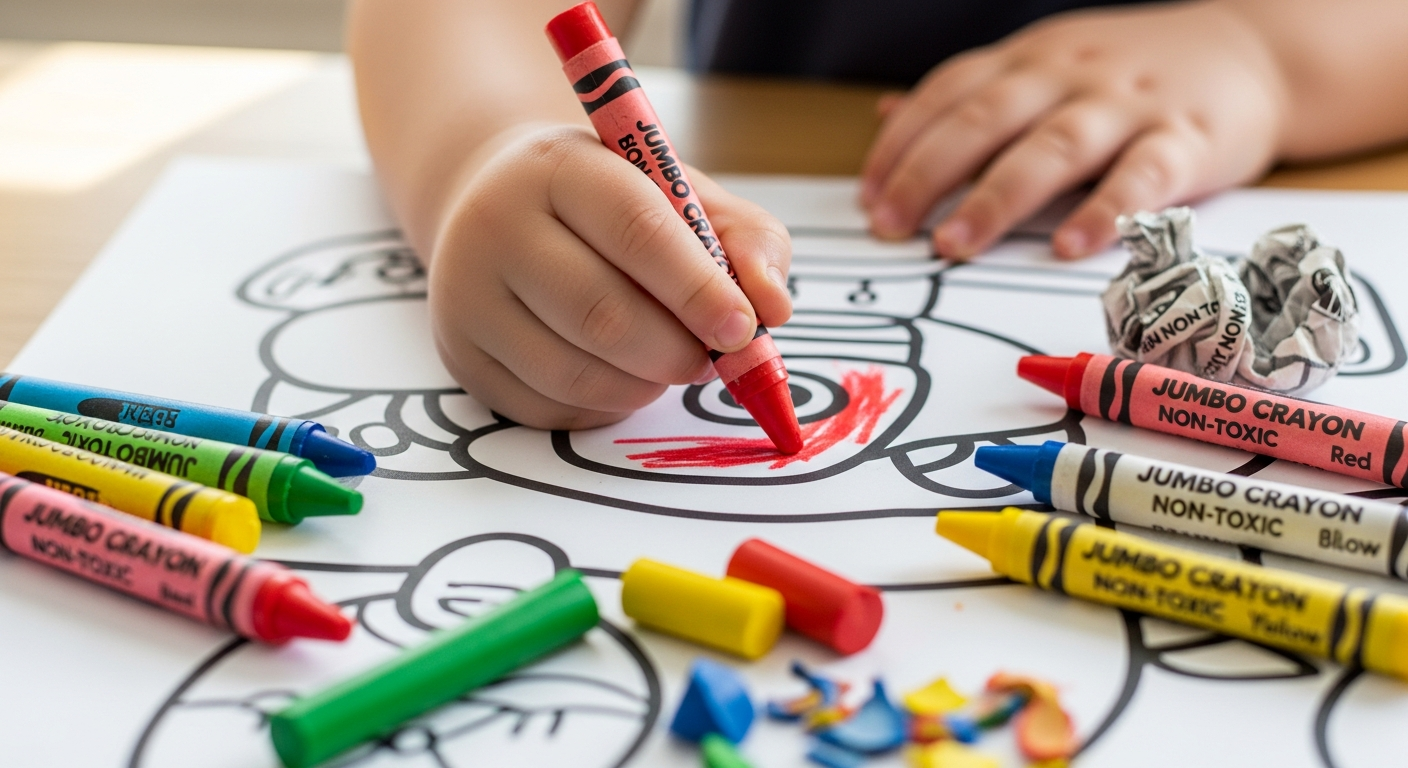
Toddler using jumbo crayons to color safely on a printable sheet.
Crayons are often a toddler’s first art tool. They’re perfect for little hands – if you choose the right kind. Here’s how to select crayons that are both fun and safe for your toddler:
- Big and Easy to Grip: Opt for jumbo crayons or other ergonomically designed crayons for young children. Thicker crayons (often marketed as “toddler crayons” or “first crayons”) are easier for toddlers to hold and less likely to break into tiny pieces. Some brands even make egg-shaped or palm-grasp crayons for children as young as 1 year old, which are AP certified non-toxic and safe for 12 months+. These larger crayons not only help your child scribble with ease but also support hand strength and coordination. For older toddlers who are ready for more precision, you can gradually introduce exercises like coloring inside the lines to improve focus and pencil control.
- Non-Toxic Ingredients: Choose crayons from reputable brands that explicitly state they are non-toxic. Most major crayon brands (Crayola, for example) have formulated their crayons to be safe if accidentally ingested. They use color pigments and waxes that are free from heavy metals and other toxins. If you’re considering “all-natural” crayons made from beeswax or soy wax, those can be a great option too – they typically have minimal additives. Just ensure they still carry a non-toxic label or certification. Remember, toddler crayon = non-toxic crayon – this is non-negotiable.
- Washable Crayons (Optional): Standard crayons are waxy and usually don’t stain too badly, but some brands offer washable crayons designed to easily wash off walls or fabrics. If your little Picasso is especially adventurous on surfaces, you might invest in these. They’re also non-toxic; the washable feature is more about the pigment washing away than a safety difference. It can, however, make cleanup much less stressful for you.
- Avoiding Hazards: Steer clear of cheap, unknown crayon brands that don’t clearly list safety info. As mentioned earlier, some discount-store crayons were found to contain asbestos fibers – something you definitely don’t want your child coloring (or worse, putting in their mouth). It’s best to stick with crayons from well-known children’s art supply companies or those on the ACMI certified product list. Also, be cautious with old or inherited crayons of uncertain origin (vintage crayons might have used pigments that are now banned). When in doubt, throw them out and get a fresh pack of non-toxic crayons.
Finally, always supervise your toddler during coloring. Even with safe crayons, kids can be quick to test them as a snack. A small bit of crayon wax won’t poison a child (thanks to the non-toxic formulation), but swallowing larger chunks could upset their tummy or pose a choking risk. With you watching and the right crayons in hand, your child can safely explore all the colors of the rainbow on their coloring pages (you can print some out from YoloColoring’s free coloring sheets for an easy start!).
Step 3: Pick Washable Markers and Skip the Harsh Chemicals
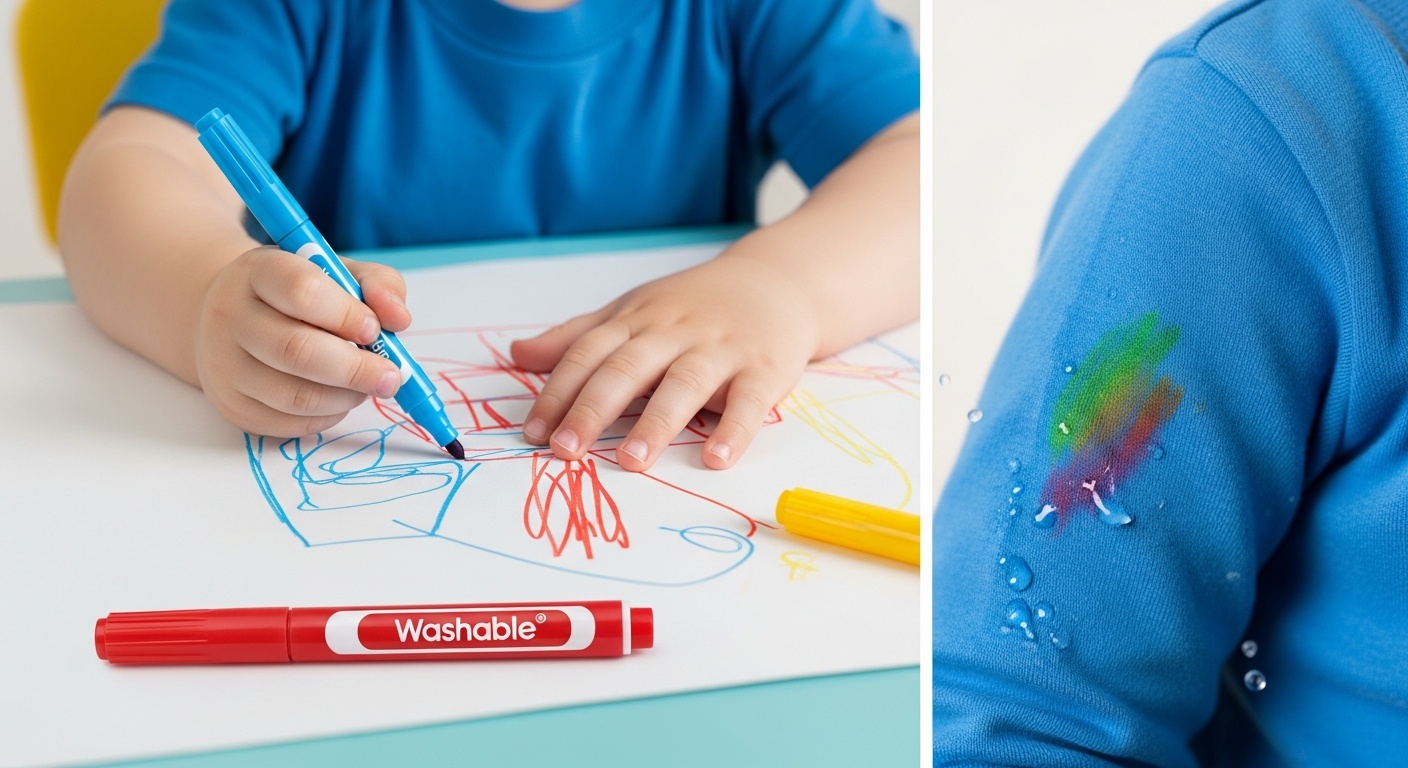
Washable markers safe for toddlers with clean clothes and hands after use.
Markers are a wonderful tool for toddlers – they often give brighter, bolder strokes than crayons with less effort. However, not all markers are child-safe. Here’s how to choose markers that will let your little one draw safely:
- Washable Markers Only: For toddlers, always go with washable markers. These are water-based markers specifically made for young kids. They are designed to easily wash off skin, clothing, and furniture. More importantly, washable kids’ markers are formulated without the strong solvents found in permanent markers. Many washable marker sets proudly advertise that they are non-toxic and AP certified. You’ll find these from brands like Crayola, Faber-Castell (kids’ line), and other companies focusing on children’s art. The package should say “Washable” and “Non-Toxic” prominently – that’s your cue that they’re meant for kiddos.
- Avoid Permanent or Solvent-Based Markers: Never give a toddler permanent markers, industrial markers, or any marker that has a strong odor. Those contain chemicals (like alcohols, xylene, or other solvents) that can irritate eyes and lungs. In fact, many permanent markers emit fumes that can include harmful chemicals such as formaldehyde and ammonia. If a marker says things like “waterproof”, “for CD/DVD”, or has caution labels about ventilation, it’s not for young children. Save those for adult use and keep them out of reach. Toddlers won’t know not to draw on themselves or put the marker tips in their mouth, so it’s best to eliminate these hazards entirely.
- Watch Out for Scented Markers: While fruity or candy-scented markers might seem fun, they are not ideal for little ones. The scents can encourage kids to sniff or lick the markers, and the added fragrances may contain unwanted chemicals. Some scented markers have been found to contain phthalates (chemical additives that can disrupt hormones) to produce those smells. It’s safer to stick to unscented, washable markers for now. You can introduce the smelly markers when kids are older and less likely to taste them – and even then, look for brands that specifically say they are non-toxic and phthalate-free.
- Safety Features: Check that the marker caps are child-safe. Many kids’ markers have ventilated caps (little holes in the cap) to prevent choking if accidentally swallowed. This is a great feature, but still, always ensure marker caps stay out of mouths. A good practice is to count the markers and caps before and after art time to make sure nothing went missing. Also, choose markers with a durable tip – some toddlers like to press down hard, and cheap markers might fray or the tip might come out. A broken tip could be a swallowing hazard and also make a mess.
With washable, non-toxic markers, your toddler can explore vibrant colors alongside crayons. They’ll love being able to make bold lines (and you’ll love that any ink on their hands or the table will come off with a bit of soap and water). As always, supervise marker use closely. Even “non-toxic” markers are not edible, and a child who decides to chew one open could still get a mouthful of ink (yuck!). But if you’ve chosen well, that ink will be water-based and safe in small amounts. Keep some damp paper towels handy for quick clean-ups, and let the creativity flow on those coloring books or printable coloring sheets you’ve downloaded.
Step 4: Select Safe Paints, Clays, and Other Craft Materials
Beyond crayons and markers, toddlers often enjoy other art mediums like paints, play dough, and glue. We want these supplies to be just as safe. Here’s what to consider for common toddler art materials:
- Finger Paints and Water-Based Paints: Finger painting can be a delightful sensory experience for toddlers – squishy, colorful fun! When choosing paints for hands-on play, make sure they are explicitly labeled for toddlers or kids and non-toxic. Many finger paints say “safe for 2+” or even “12 months and up” on them. These are usually water-based paints that are easy to wash off skin. Look for the AP seal or similar assurance here as well. Avoid any paint that requires you to mix in solvents or that has warnings (some model craft paints or artist acrylics are not suitable for kids). Powdered paint (like tempera powder pigment) is not good for little ones, because powder dust can be inhaled and irritate lungs and eyes. Instead, buy pre-mixed, liquid tempera or finger paints with a non-toxic label, or make your own edible paint at home (there are DIY recipes using flour or cornstarch, water, and food coloring). In fact, homemade edible finger paint can be as simple as mixing a bit of food coloring into plain yogurt – it’s safe enough to eat, which is perfect for the inevitable taste-test! Just be mindful of any food allergies when choosing DIY ingredients (for example, some homemade play recipes use peanut butter or wheat; opt for allergy-safe ingredients for your child).
- Play Dough and Clay: Many toddlers also love squishing and molding. Commercial play doughs like Play-Doh are non-toxic (they’re usually made from flour, salt, and food-grade colorings). They do, however, often contain wheat gluten and a lot of salt – so while a tiny nibble isn’t poisonous, eating a larger amount could upset a tummy (and the salt content is concerning). So supervise closely to discourage your child from tasting the dough. An alternative is to make your own play dough at home: a simple dough from flour, salt, water, a bit of oil, and food coloring works great and is taste-safe. Homemade play dough can even be made with rice flour or other substitutes if you need a gluten-free version. If you want a really edible modeling material, you can try something like molding with marzipan or fondant (edible, but sugary!) – though those are treats and not everyday craft supplies. As for clay, avoid any polymer clays or air-dry clays that aren’t labeled for kids; they might contain chemicals that shouldn’t be ingested. Stick to soft, non-toxic clays and doughs meant for young children, and always read the label.
- Glue and Adhesives: Crafts often involve sticking pieces together, so you’ll likely need glue at some point. The safest choice for toddlers is white school glue (PVA glue) or glue sticks that say non-toxic. These are water-based glues that clean up with water. Avoid strong adhesives like rubber cement, model glue, or super glue – those contain solvents and give off fumes that are harmful for kids. Plus, super glue can bind skin in seconds (imagine those little fingers accidentally gluing together). Save the heavy-duty adhesives for adult use. For toddlers, a swipe of a non-toxic glue stick or a dab of white glue is enough for their paper crafts. There are also vegetable-based pastes (like those old-fashioned library pastes) which are safe if a child licks their finger. When doing collage activities, you can even use a homemade paste made from flour and water as a completely edible glue alternative – but note it won’t hold as strongly or as long as commercial glue. Again, supervise gluing, because some kids will find the texture interesting and might decide to taste it. Keep lids on glue when not in use to avoid spills or sneaky sips.
- Other Craft Bits: Be careful with tiny craft items like googly eyes, beads, buttons, sequins, or loose glitter when crafting with toddlers. These are choking hazards and should generally be kept away from children who still put things in their mouths. If you want to add some sparkle, consider using glitter glue (pre-mixed glue that contains glitter). The glitter bits stay suspended in the glue and are less likely to flake off everywhere – but even so, use sparingly and with supervision. Also, ensure any stickers or craft foam pieces you give your toddler are large enough not to swallow and made of non-toxic materials (most stickers are safe if ingested in small amounts, but they’re a choking concern). Avoid any craft paints or supplies that come in spray cans or aerosols (spray paint, fixatives, etc.) – the fumes and mist aren’t safe for little lungs, and spraying is an adult-only activity.
By selecting water-based, non-toxic paints, clays, and glues (and keeping the teeny craft bits out of reach), you’ll round out a collection of art supplies that let your toddler explore crafts safely. A good rule of thumb: if the supply is marketed towards preschool or toddler age, it should be okay as long as you follow the usage instructions. When in doubt, do a quick search or check the manufacturer’s website to see if an item is described as child-safe. Once you have these safe supplies, set up a toddler-friendly art space – maybe a washable tablecloth or an art mat on the floor – and let your child’s imagination roam free. You’ll be able to relax knowing that even if more paint ends up on their hands than on the paper, it’s non-toxic and will wash right off. The goal is worry-free creative fun for both of you!
Encouraging Creative Play with Peace of Mind
Choosing safe and non-toxic art supplies for your toddler might take a little extra effort at first – reading labels, finding the right products – but it pays off every time you see that proud, paint-smeared grin on your child’s face. With non-toxic crayons, washable markers, and kid-friendly paints in hand, you can say “yes” to arts and crafts without constant worry. Remember to supervise your little artist and maybe dress them in a smock or old t-shirt, but then let them have at it! The benefits to their creativity and development are huge, and now you’ve minimized the risks. So stock up on those safe supplies, cover the table, and grab a free printable coloring sheet from YoloColoring to jumpstart the fun. Your toddler will love creating artwork that’s uniquely theirs – and you’ll love knowing it’s a safe, enriching activity. Happy coloring!
FAQs: Safe Art Supplies for Toddlers
Q: How can I tell if a crayon or marker is truly non-toxic?
A: Look for specific signals on the product label. The packaging should say “non-toxic,” and ideally have an AP Certified seal (from the Art & Creative Materials Institute) or mention compliance with ASTM D-4236. These indicate the item has been tested and contains no harmful substances. Also, choose products designed for children – they must meet stricter safety laws for lead, phthalates, etc., especially in the US (CPSIA regulations). If a crayon or marker has warning phrases like “Keep out of reach of children” or doesn’t clearly state it’s non-toxic, skip it for your toddler.
Q: What art supplies are best for a 1 to 3-year-old child?
A: For toddlers, stick to simple, easy-to-use supplies made for their age. Great choices include jumbo non-toxic crayons, washable markers, and finger paints labeled for young ages (often 2+ or 3+). Play dough or modeling clay that is non-toxic (or homemade from edible ingredients) is also wonderful for this age – it helps them explore textures safely. Always avoid any small pieces (like mini crayons or tiny caps) that could be choking hazards. Many brands have a “My First” or toddler line (for example, My First Crayola crayons and paints) which are perfect for this stage.
Q: Are Crayola crayons and markers safe if my toddler puts them in their mouth?
A: Yes – Crayola’s products (and those of other reputable kids’ art brands) are designed to be non-toxic because it’s well-known that little kids may mouth them. A small bit of crayon wax or a taste of marker ink should not cause poisoning. Crayola crayons, for instance, carry the AP non-toxic seal. That said, “non-toxic” doesn’t mean “nutritious” – eating art supplies is never recommended! If your toddler swallows a large amount (like an entire crayon or drinks paint water), you might see some digestive upset. When in doubt, consult your pediatrician. But generally, a licked paintbrush or a crayon nibble isn’t harmful with kids’ products. Still, do your best to keep art tools in hands and on paper, not in mouths.
Q: What’s the difference between washable markers and regular markers?
A: Washable markers are made to be child-friendly: they use water-based inks that rinse out of most fabrics and off skin with soap and water. Regular markers (like permanent markers or many office highlighters) often use alcohol-based or other permanent inks that are harder to clean and may contain more chemicals. Washable markers also tend to have less odor. In short, washable = easier to clean and safer for kids. Always choose washable versions for young children’s art. If you see terms like “non-washable” or no indication at all, assume it’s not meant for kids. And definitely keep permanent markers away from toddlers – those can have toxic solvents and strong fumes.
Q: Can I make DIY art supplies that are safe for my toddler?
A: Absolutely! Parents have come up with great DIY craft ideas for safe art materials. For example, you can make edible finger paint by mixing food coloring with plain yogurt or cornstarch and water – it creates colors that won’t hurt your child if they put their fingers in their mouth. Homemade play dough is another popular one: a simple recipe with flour, salt, water, and a bit of oil (plus natural food coloring) yields a non-toxic, taste-safe dough. You can even use crushed berries or spices to color homemade paints for a chemical-free approach. Just remember, homemade mixtures can spoil, so keep them refrigerated and toss after a few days or if you see mold. And even though these DIY supplies are edible, supervise your toddler to prevent them from treating art time like snack time. Always test a small area for staining if you’re concerned about cleanup (for instance, beet juice paint can still stain clothes). Overall, making art supplies at home can be a fun project and gives you full control over the ingredients – just be sure to use child-friendly, food-grade components.
Now you’re equipped with knowledge to choose the safest art supplies and even make your own. With the right tools in hand, you can encourage your toddler’s creativity and development with confidence. Happy crafting and coloring! Enjoy watching your little one create, learn, and have a blast – safely and colorfully.

Sophia Williams is the voice of the YoloColoring community. As our Content Editor, she crafts all the helpful articles, guides, and descriptions you read on the site. She is also our Community Manager, dedicated to connecting with users, celebrating their creations, and fostering a warm, supportive environment for all colorists.