
Coloring isn’t just a creative outlet – it can also be a smart way to practice early math! By combining simple counting instructions with coloring fun, you can “turn coloring time into math time.” For example, you might say “Color 3 apples red” or “Color the number 1 blue.” These playful commands get preschoolers counting while they color. Using free printable coloring pages from YoloColoring makes it easy to try this at home or in the classroom.
Kids practice counting as they color: printable worksheets with numbered objects turn art time into math time. Coloring pages like these ask children to count objects and color them accordingly. For instance, a page might have balloons numbered 1-7 and require coloring the numbered sets. This mixes visual counting with hands-on activity. Over time, students learn to recognize numbers (1, 2, 3…) and match them with the correct number of items.
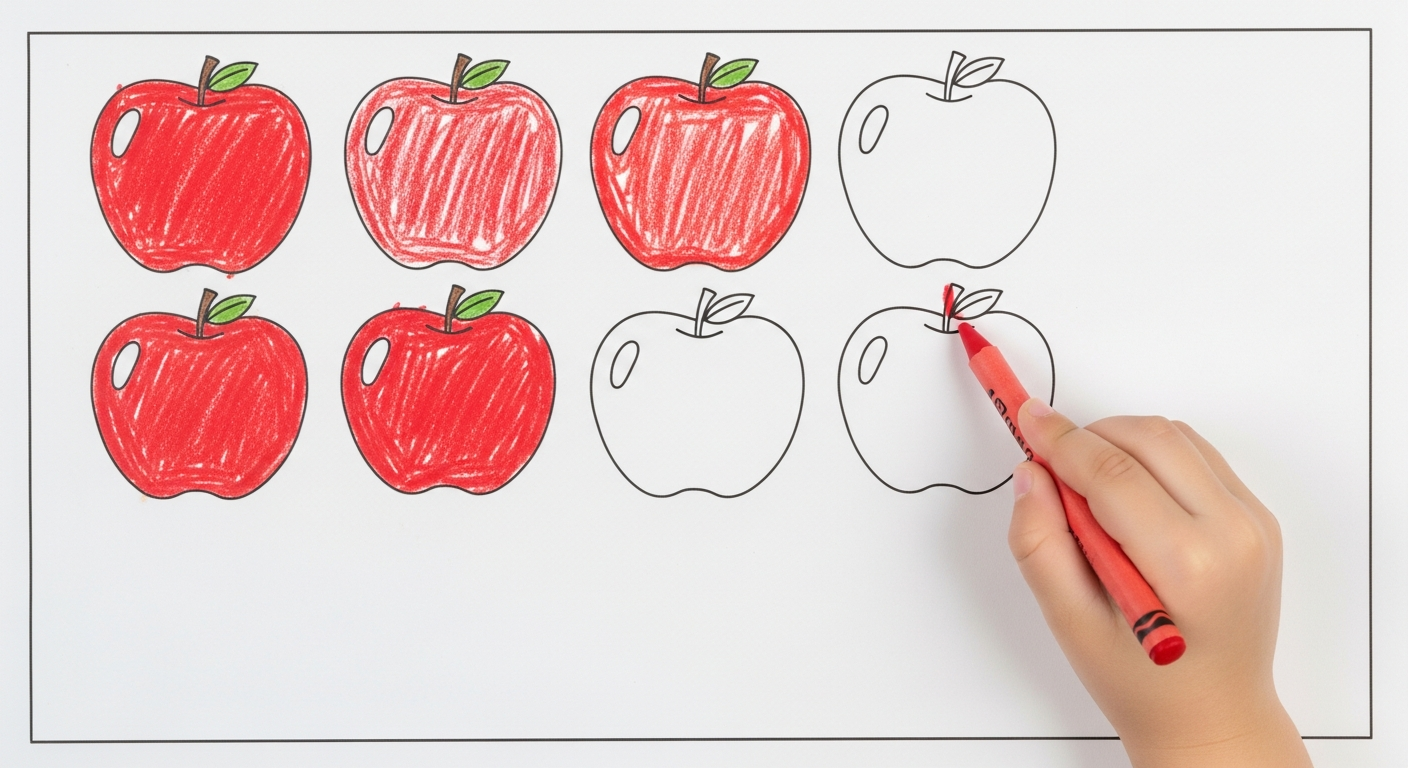
Coloring 3 red apples as part of a counting worksheet
Why Coloring Builds Number Skills
Coloring pages naturally support counting and number recognition in several ways:
- Counting Practice: Many worksheets instruct kids to “Read the number. Count and color the correct number of objects.” For example, one popular pack tells students to “Count and color the objects” next to each numeral. When children color exactly that many items (e.g. coloring 5 stars when the number is 5), they learn one-to-one correspondence – the idea that each numeral corresponds to a certain quantity. This hands-on counting builds strong number sense.
- Number Recognition: Some coloring pages feature big outlined numerals or have a color code by number. By matching digits to colors (color-by-number) or coloring in the shape of a number, kids reinforce what each numeral (1, 2, 3, etc.) looks like. These visual associations help solidify number recognition. For instance, “Color the number 4 green” makes the numeral 4 memorable. ABCmouse notes that “free printable number coloring pages help kids explore counting from 0 to 100 in a creative, hands-on way” and that they are “a fantastic way to build early number recognition and counting skills.”
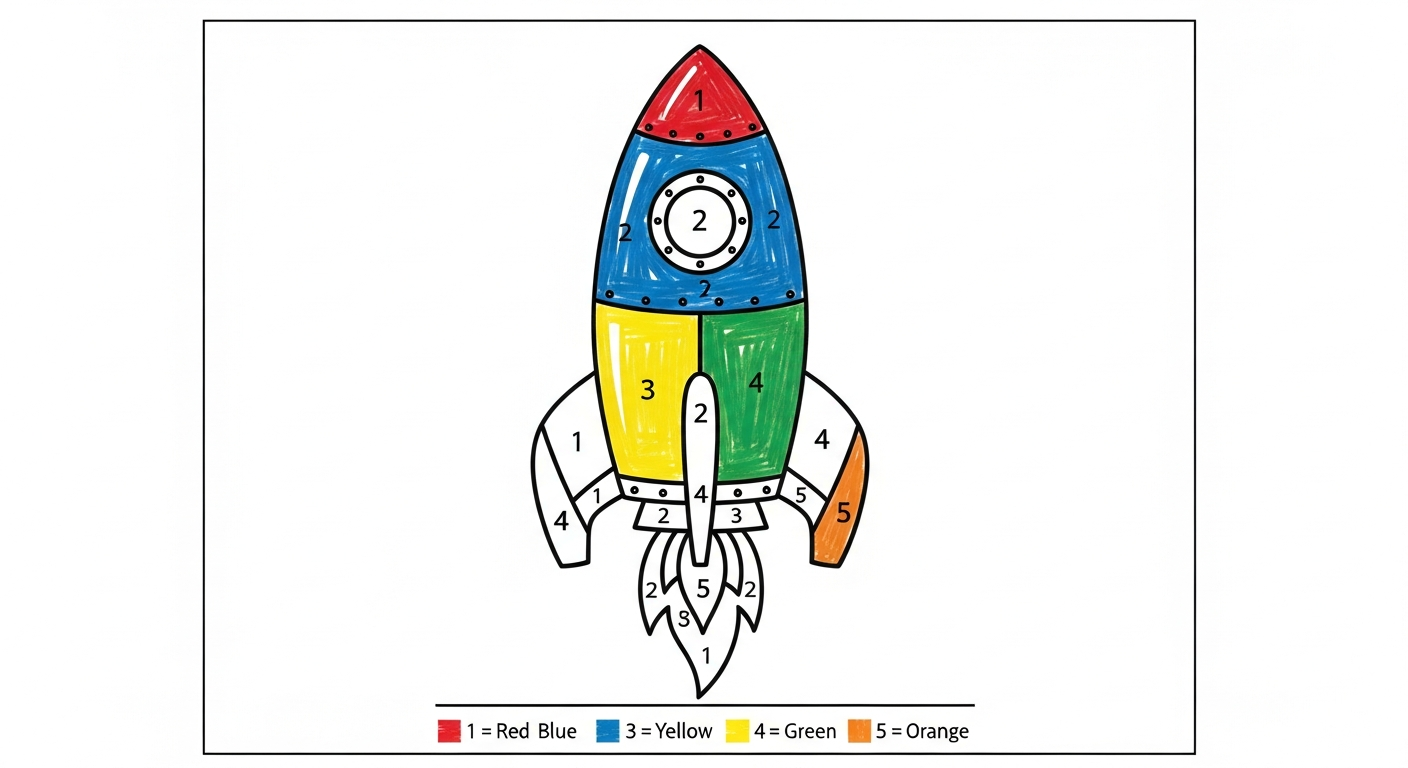
Color-by-number worksheet helping kids recognize numbers
- Fine Motor Development: Beyond math, coloring also strengthens the small hand and finger muscles used for writing. Research confirms that coloring pages “are perfect for helping preschoolers and kindergartners develop fine motor skills while working on number sense, number recognition… counting”. Similarly, one resource explains that during these activities, “children will be working on their fine motor skills while reinforcing some math skills and having fun.”By gripping crayons, staying within lines, and coordinating hand movements, young learners gain the motor control needed later for handwriting and more complex tasks.
- Engagement and Fun: Coloring makes learning playful. When math looks like art, children stay interested. Using cute themes (animals, vehicles, fruit) on the coloring sheets keeps kids motivated. As one blog observes, kids “will have fun learning about numbers” with these math coloring pages. In short, the combination of creativity and counting keeps students engaged and excited.
Picking the Right Printable Coloring Sheets
To teach counting effectively, choose coloring sheets that include numbers and countable objects. Here are some ideas:
- Picture Counting Pages: Look for pages showing multiple items (apples, balloons, stars, etc.) next to a numeral. For example, a worksheet might show 4 apples and say “Color the 4 apples yellow.” This directs the child to count the apples and color exactly that many. YoloColoring has many “printable coloring sheets” to download.
- Color-by-Number Coloring Pages: These pages use a key (e.g. 1 = blue, 2 = red) so that each part of the picture is filled in by number. This reinforces number recognition as kids must match each numeral to the correct color. It also adds a simple coding skill. For example, a worksheet might say “Color the petals with odd numbers green and the petals with even numbers yellow.” This way, children practice identifying odd and even and color simultaneously.
- Number Tracing and Coloring Sheets: Some sheets have large printed digits for children to trace or color in. These help kids learn number formation. By tracing the outline of “5” or “8” and then coloring them, children get familiar with how each number is written and shaped.
- Themed Learning Pages: Choose themes your child loves (animals, space, holidays) that incorporate counting. A worksheet could have 3 rockets to color or 2 pumpkins to count. Engaging themes keep kids motivated to count and color.
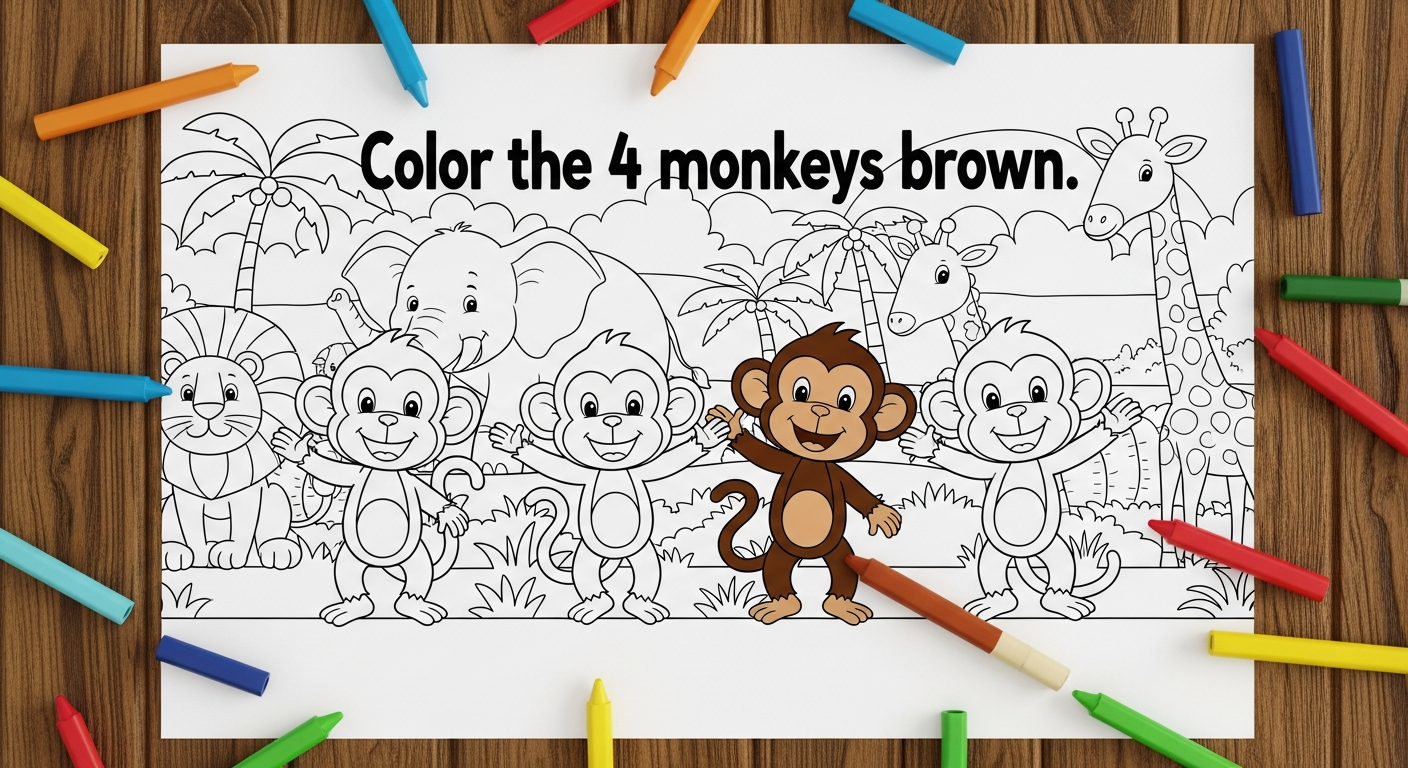
Worksheet with 4 cartoon monkeys and a number prompt
Step-by-Step Counting Coloring Activity
Turning a coloring page into a counting lesson can be done with a few simple steps. Try this approach:
- Select a Counting Page. Print a coloring sheet that has clear objects to count (e.g. fruits, animals, balloons). Make sure the page also has numbers or instructions on it. Find free coloring pages for numbers and math to match your lesson.
- Count Together. Before coloring, point to the objects and count them with your child. Say the numbers out loud as you count each item (1, 2, 3, …). This reinforces counting aloud and one-to-one correspondence (one number per object).
- Give a Coloring Instruction. Use a simple math command involving a number. For example: “Color 3 apples red.” or “Color the number 1 blue.” Write or say the instruction clearly. The child then must count the apples and color exactly three of them, or find the digit 1 and color it.
- Color and Check. Have the child color according to the instruction. Afterward, count the colored items together to verify. For instance, count the red apples: “One, two, three. Yes, we colored three!” Praise them for matching the correct number.
- Discuss. Ask review questions: “How many apples did we color? Which number did we use?” Encourage the child to say the number in words. This helps solidify number words and counting. For older kids, ask more: “Is there more than one way to color three apples green?” to provoke thinking about number combinations.
These steps make coloring time interactive and educational. The key is to connect the action of coloring with a number-based task at each step.
Beyond Counting: Building Skills with Coloring
Coloring pages teach counting, but they also develop other important skills:
- Fine Motor and Hand-Eye Coordination: As kids color within lines and follow patterns, their pencil grip and control improve. Over time, children gain steadiness in their strokes. Free math coloring worksheets are especially good for this – they’re “a great way to work on fine motor [skills] while learning about numbers” . Strong fine motor skills set the stage for writing, cutting, and even tying shoes. For best results, be sure to choose safe, non-toxic art supplies for toddlers that encourage safe, confident exploration.
Non-toxic crayons and markers for toddlers on a colorful desk
- Concentration and Patience: Coloring requires focus and patience, which are valuable for any learning. Staying inside tiny spaces or finishing a picture teaches kids to concentrate on a task.
- Creativity and Color Skills: Even with numbers, coloring is art. Encourage children to experiment with crayons or colored pencils. For older preschoolers, introduce simple blending techniques. For example, layering two colors (like adding yellow over blue) will smoothly create green shades. Another technique is burnishing: after coloring a bit, press a white pencil or a colorless blender pencil firmly to “polish” the colors together. This makes the colored area rich and shiny. These blending methods (layering and burnishing) teach control and artistry and keep advanced kids engaged.
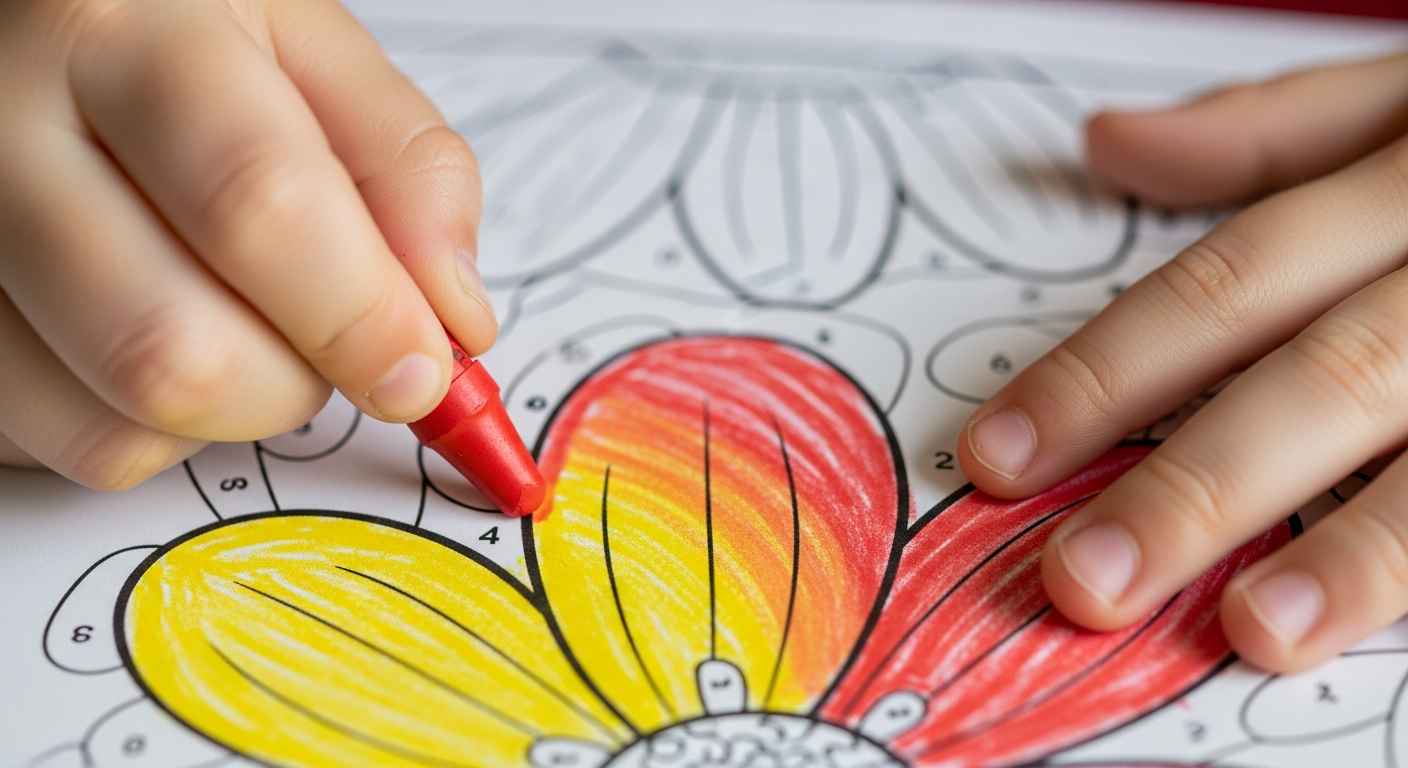
Crayon blending on a flower petal in a math coloring page
- Color Recognition and Theory: Talking about colors while they color also helps. You might say, “You mixed blue and yellow and made green!” or “You made the even balloons yellow.” This introduces basic color mixing and math concepts (like odd/even) naturally.
Each coloring session can thus be both an art lesson and a math lesson.
Free Printable Resources
To make this easy, grab free printables. Many websites offer free math and number coloring pages. You can find sets like counting color-by-numbers, dot-to-dot number challenges, and object-count worksheets. For example, one collection includes activities like:
- “Color the apples while counting to 20.”
- “Read the number. Count and color the objects.”
- “Roll a die. Find the number and color in the picture using the code.”
Just print and go – no prep needed! Using black-and-white (line art) worksheets lets kids use any coloring tools (crayons, markers, pencils).
Kids especially love themes. Look for pages with their favorite animals or characters. For instance, a page of jungle animals might have “Color the 5 monkeys brown.” Using colorful and thematic pages makes math exciting.
YoloColoring’s gallery of coloring sheets includes number collections, shape coloring, and holiday themes. Download the ones you like and pair them with your counting questions. The more practice, the better children understand numbers in a fun, stress-free way.
Conclusion
Coloring time can double as a mini math lesson. By choosing the right worksheets and asking number-focused questions (“Color 3 oranges,” “What number is this?”), parents and teachers turn art into counting practice. This builds number sense, counting confidence, and motor skills all at once.
Ready to try? Print a few number coloring pages from YoloColoring today. Grab those crayons and start counting and coloring together. You’ll see – a simple coloring page can make learning numbers easy and enjoyable!
Frequently Asked Questions
How do coloring pages help teach counting?
Coloring pages with numbers turn abstract digits into concrete examples. Kids count pictures (stars, animals, etc.) and color them, linking each numeral to an actual count. This hands-on counting practice reinforces number concepts and one-to-one correspondence in a fun way.
What age is best for number coloring worksheets?
Number coloring activities are great for preschool and early elementary kids (ages ~3-7). At this stage, children are learning number words and counting. Young toddlers can simply enjoy coloring, while 4- to 6-year-olds can count and color specific amounts. Adjust the difficulty by choosing simple pages for 3-4 year olds and more complex ones for 5-6 year olds.
What skills does my child develop with number coloring pages?
Besides counting, kids build fine motor skills (holding crayons, coloring inside lines) and number recognition. They also learn following directions and develop concentration. As mentioned, coloring can introduce patterns (even vs. odd numbers), basic color mixing, and creativity. All these support school readiness.
Where can I find free number coloring sheets?
There are many free resources online. YoloColoring offers thousands of free printable coloring sheets, including pages focused on numbers and counting. You can also find themed counting pages on educational blogs and teacher websites. Look for terms like “count and color worksheet” or “math coloring pages preschool.” All you need is a printer and crayons to get started!

Sophia Williams is the voice of the YoloColoring community. As our Content Editor, she crafts all the helpful articles, guides, and descriptions you read on the site. She is also our Community Manager, dedicated to connecting with users, celebrating their creations, and fostering a warm, supportive environment for all colorists.