
In the quiet hum of a classroom or the cozy corner of a living room, a child hovers over a sheet of paper, their brow furrowed in concentration. Before them lies a mandala – a complex, circular dance of geometric shapes. But this is not merely an exercise in filling space with color. The child is engaged in a profound cognitive task. They scrutinize a blue petal they colored on the left, their eyes dart across the center line to the empty space on the right, and they carefully replicate the hue and stroke. In this moment, they are not just an artist; they are a mathematician exploring the world of symmetry.
Symmetry is a fundamental principle of the universe, found in the wings of a butterfly, the architecture of a cathedral, and the structure of atoms. For a developing child, grasping symmetry bridges the gap between the creative right brain and the analytical left brain. While abstract math concepts can be daunting, mandala coloring pages offer a natural, hands-on way to spark that “fire of understanding.”
At YoloColoring, we believe in the power of art to educate. This guide will walk you through the science of why our brains love balance, provide a step-by-step “Mirror Method” for teaching symmetry, and offer troubleshooting tips for common hurdles. Let’s turn coloring time into a powerful learning adventure.
The Cognitive Magic: Why Teach Symmetry?
Before we pick up the crayons, it is helpful to understand why this activity is so beneficial. When a child colors a mandala with the specific goal of matching the left side to the right, several developmental gears turn at once.
1. Fine Motor Precision and Grip
Coloring intricate mandala patterns requires a mature tripod grip and precise muscle control. Unlike free drawing, where movements can be sweeping and unconstrained, coloring within the lines of a geometric grid forces the child to practice inhibition – the ability to stop a movement at a specific boundary. Research shows that these activities significantly improve hand muscle strength and dexterity, which are essential for tasks like writing and buttoning clothes.
2. Crossing the Midline
The “midline” is an invisible vertical line dividing our body into left and right. The ability to reach across this line is a vital developmental milestone. When a child colors a large mandala, they often reach their dominant hand across to the opposite side of the paper. This action facilitates communication between the brain’s two hemispheres, strengthening the neural pathways required for reading (tracking eyes left to right) and physical coordination.
3. Focus and Stress Reduction
There is a reason mandalas are popular in art therapy. The repetitive nature of filling in symmetrical patterns activates the parasympathetic nervous system, lowering cortisol levels and reducing anxiety. For high-energy kids, this structured focus acts as “active meditation,” training their attention span while they create.
Step-by-Step Guide: The “Mirror Method”
Teaching reflectional (bilateral) symmetry is best done through a scaffolded approach. We call this the Mirror Method.
Phase 1: The Concept – “Mirror, Mirror”
Start off the page. Use a small handheld mirror to demonstrate the concept.
- The Mirror Check: Take a printed mandala from YoloColoring (one that isn’t colored yet). Place the mirror vertically down the center. Show your child how the reflection completes the circle.
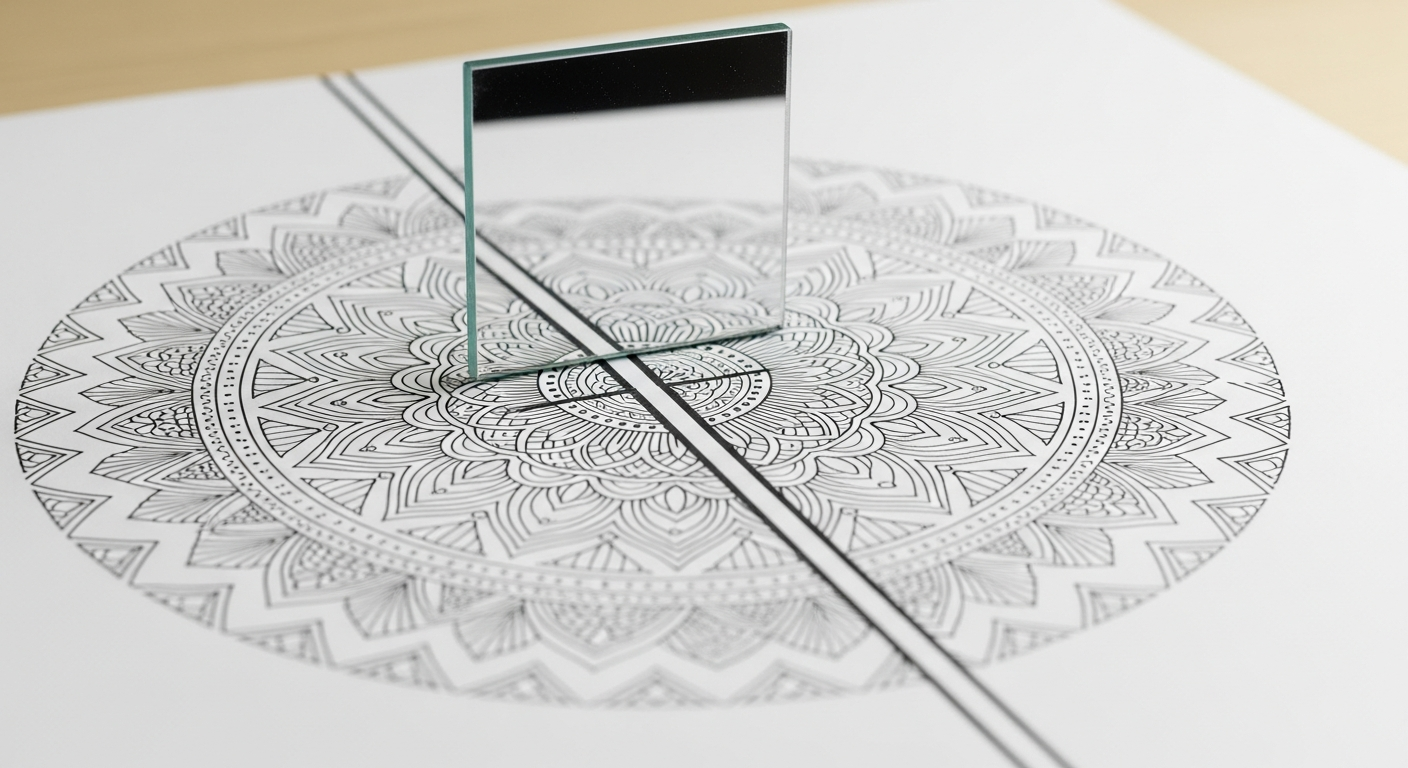
- Real-World Hunt: Go on a “Symmetry Scavenger Hunt.” Look for leaves, insects, or household items that look the same on both sides.
Phase 2: The Setup
Proper preparation prevents frustration.
- The Line of Symmetry: Use a ruler and a bold black marker to draw a vertical line down the exact center of the coloring page. This visual anchor is critical for the child to distinguish “Left” from “Right.”
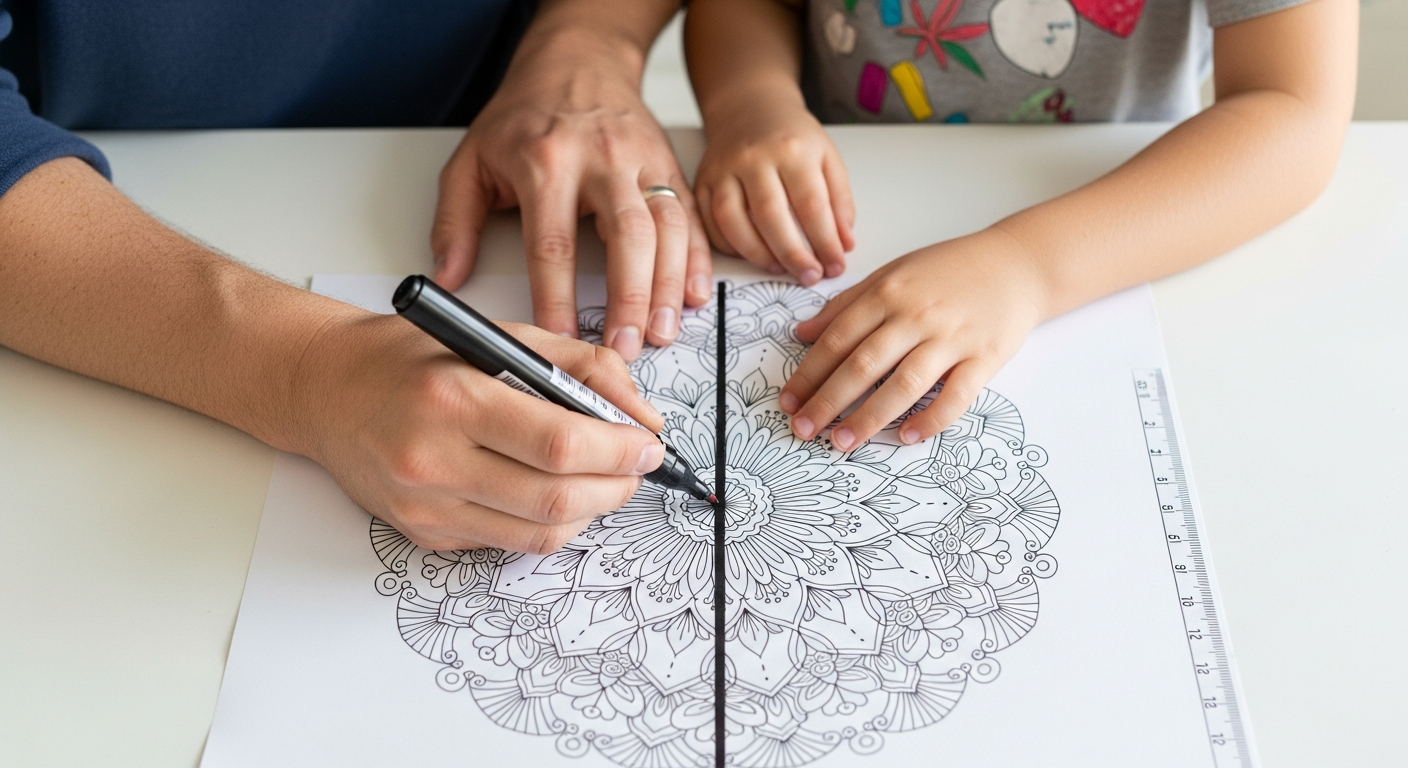
- Tape it Down: Secure the paper to the table with masking tape. This prevents the paper from shifting, forcing the child to move their arm and effectively cross the midline.
Phase 3: Anchor, Locate, Reflect
Don’t let them color randomly. Teach a disciplined rhythm:
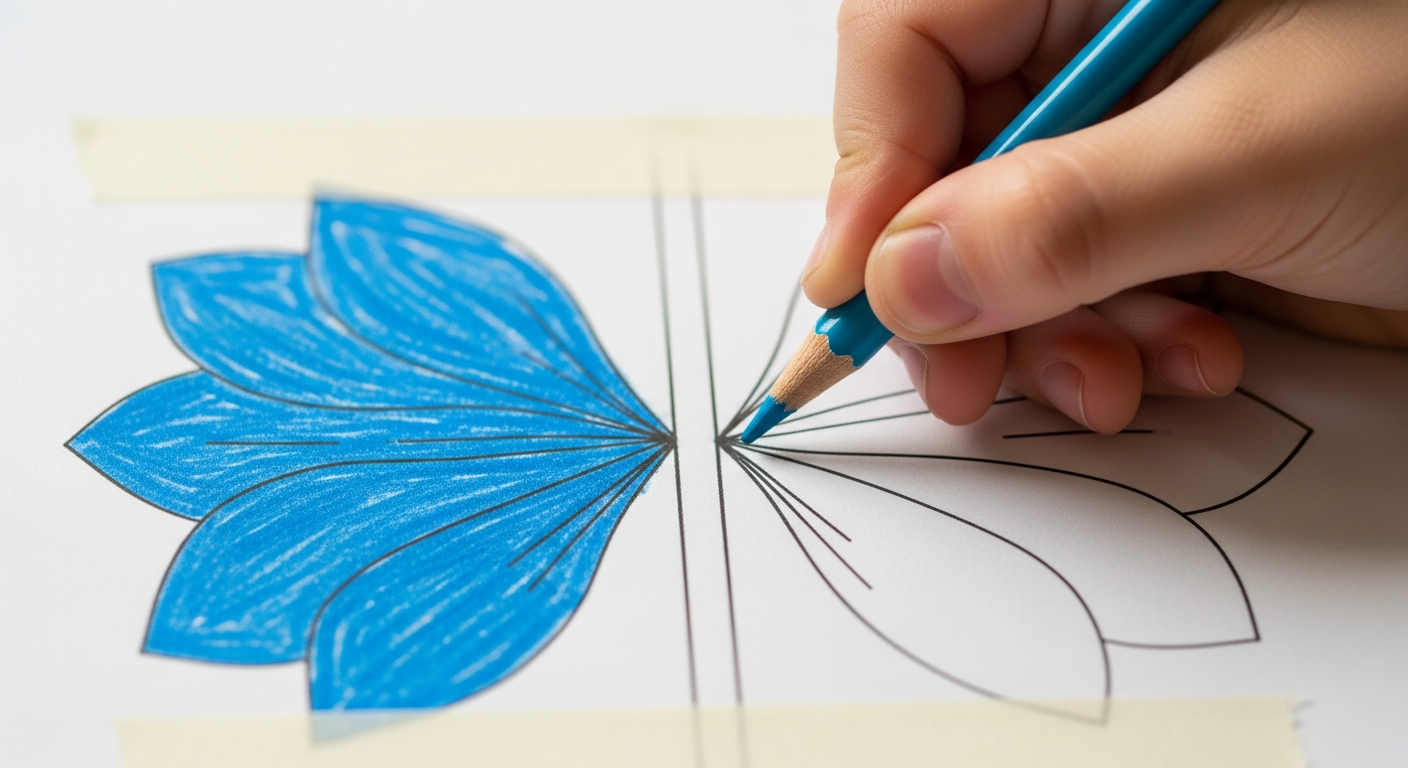
- Anchor: Choose a shape on the left side (e.g., a large central petal). Color it.
- Locate: Ask the child to find the “twin” shape on the right side. “Cross the bridge (center line) and find its partner.”
- Reflect: Color the partner shape with the exact same color.
Advanced Coloring Techniques for Older Kids
Once the basic concept is mastered, older children (ages 7+) can use symmetry to practice sophisticated art techniques.
1. Gradient Symmetry (Blending)
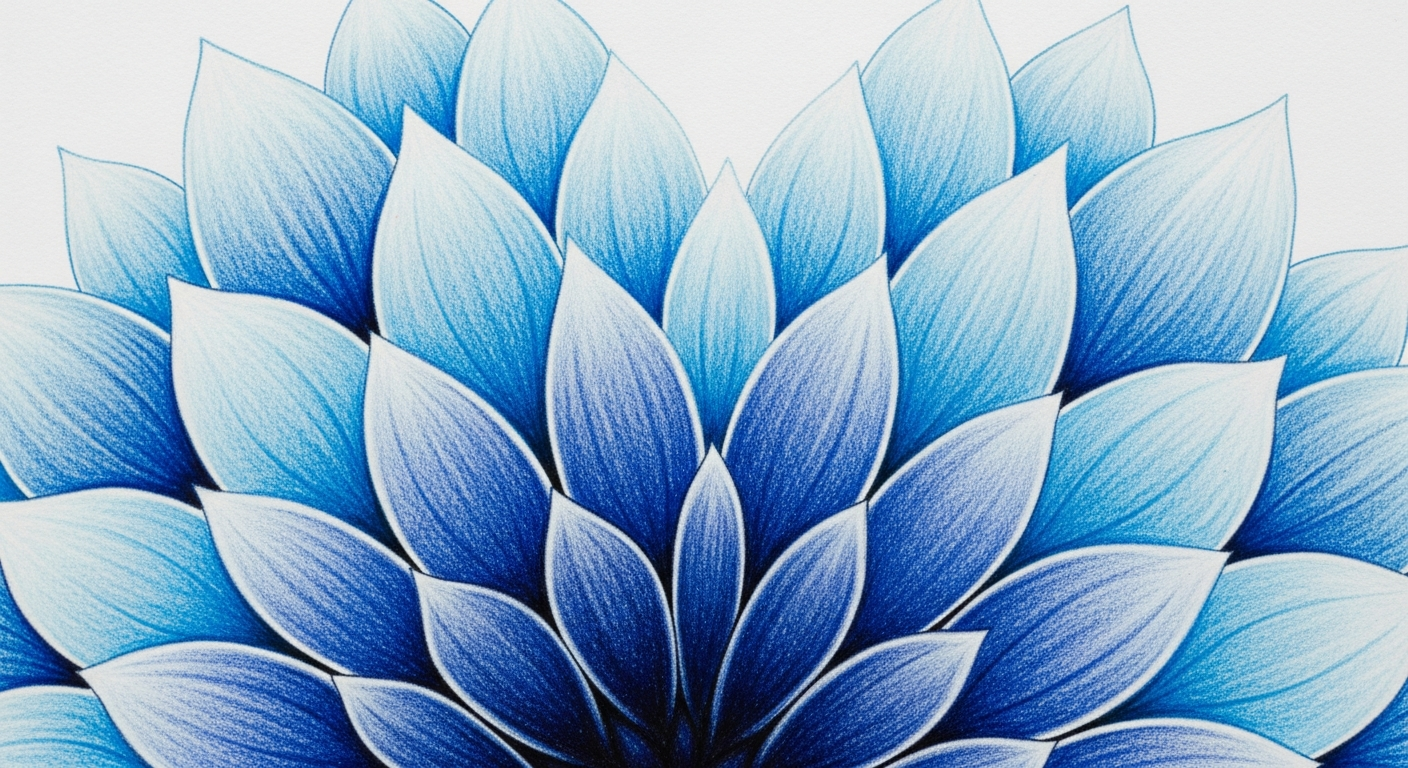
Symmetry isn’t just about solid blocks of color; it’s about matching texture and value. Teach your child to create a gradient – fading from dark to light – inside a petal.
- The Challenge: They must replicate the direction of the fade on the opposite side.If the left petal fades from dark at the bottom to light at the tip, the right petal must do the same. This requires planning and pressure control. To help them master blending fundamentals before trying complex gradients, you can teach color mixing to kids with 3 crayons using our simple guide.
2. Color Theory Balance
Use the mandala to teach color relationships.
- Warm vs. Cool: Color the center star in “hot” colors (red, orange) and the outer rings in “cool” colors (blue, green) to create a radiating effect.
- Complementary Contrast: Use opposites on the color wheel (like purple and yellow) for adjacent shapes. High contrast makes symmetry errors easier to spot, acting as a self-correction tool.
Troubleshooting Common Challenges
Every artist faces hurdles. Here is how to handle them without discouraging your little learner.
“I Can’t Stay in the Lines!”
The Fix: This is often a sign of developing motor skills or hand fatigue.
- Thicker Lines: Choose YoloColoring sheets with bold, thick outlines which provide a “buffer zone” for stray marks.
- Triangle Pencils: Switch to triangular-shaped pencils or add a pencil grip to reduce strain.
The “Perfectionist” Meltdown
The Fix: If a child colors the wrong section and ruins the symmetry, use the “Happy Accident” rule.
- Reframe it: Don’t reach for the eraser immediately. Instead, go to the other side and replicate the “mistake.” Now, the symmetry is restored, and they have created a unique variation of the design.
Boredom or Disengagement
The Fix: Gamify the process!
- Co-Coloring: You color the left side, and they must “mirror” you by coloring the right side. It turns the lesson into a game of copycat.
- Loose Parts: Before coloring, place buttons, coins, or LEGOs on the mandala to map out the colors. This builds the logic without the physical fatigue of coloring.
Conclusion
Teaching symmetry through mandala coloring is more than just a rainy-day activity. It is a scientifically grounded method for enhancing cognitive development, fine motor skills, and emotional regulation. By simply drawing a line down the center of a circle and asking a child to “be the mirror,” you are engaging their brain in a complex symphony of spatial reasoning.
Ready to start? Visit our library to download high-quality printable coloring sheets specifically designed to support these educational techniques.
FAQs
1. At what age can I start teaching symmetry with mandalas?
You can introduce the basic concept to children as young as 3 or 4 using “fold and paint” activities (squish painting). However, the precise coloring method described here is best for ages 5 to 7, as their fine motor skills allow for more control.
2. What is the difference between radial and reflectional symmetry?
Radial symmetry means the pattern rotates around a central point (like a bicycle wheel). Reflectional (or bilateral) symmetry means one half is a mirror image of the other. Mandalas naturally have both, but this activity focuses on reflectional symmetry to make it easier for kids to understand.
3. My child gets frustrated with intricate designs. What should I do?
Start simple! Avoid complex designs initially. Look for “Large Print” or “Easy” mandalas on YoloColoring that have bigger shapes and fewer details. You can also focus on coloring just one ring of the mandala at a time rather than the whole page.
4. Can this help with handwriting?
Yes! The fine motor control required to shade small areas and the ability to cross the midline are both foundational skills for handwriting. It strengthens the hand muscles and improves pencil control.

Sophia Williams is the voice of the YoloColoring community. As our Content Editor, she crafts all the helpful articles, guides, and descriptions you read on the site. She is also our Community Manager, dedicated to connecting with users, celebrating their creations, and fostering a warm, supportive environment for all colorists.